Professional property management in Maple Ridge typically costs 8% to 12% of monthly rent. The question is whether that fee gets offset by fewer vacancies, fewer compliance mistakes, and fewer expensive repair surprises, because that's where a landlord either protects cash flow or leaks it away.
If you own a rental in Maple Ridge right now, you probably know the feeling. A plumbing call lands after dinner, a tenant message sits unanswered longer than it should, and the vacant unit you expected to fill quickly is still empty while carrying costs keep ticking. That's the day-to-day test for hiring help, not the brochure version.
A Tuesday Night for a Maple Ridge Landlord
The call usually starts small. A faucet in Albion won't stop dripping, a tenant in Silver Valley wants to talk about a lease renewal, and the townhouse in Cottonwood that should've been re-leased already is still vacant. By the time you've answered one message, the other two have already turned into tomorrow's problem.
That's the part many owners miss. Managing a rental in Maple Ridge isn't just collecting rent and hoping the calendar cooperates. It's screening people properly, keeping the place in decent shape, handling late-night maintenance, and staying inside the rules that govern tenancy in BC.
Practical rule: If a rental starts taking over evenings, weekends, and your headspace, you're already doing more than casual “owner oversight.”
A property manager changes the picture by owning the process instead of leaving it to luck. The good ones make vacancies shorter, tenants more predictable, and maintenance less chaotic. They also keep the paperwork clean, which matters more than most landlords realise until a small mistake turns into a delay.
In Maple Ridge, that matters because rental ownership has become more operationally demanding. Rules are tighter, tenant expectations are higher, and old-school informal management doesn't hold up the way it used to. The rest of the decision comes down to four things, fewer vacancies, stronger tenants, fewer legal mistakes, and steadier maintenance.
What a Maple Ridge Property Manager Actually Does
A real property manager doesn't just answer the phone and forward emails. The job starts before a tenant ever moves in, and it keeps going through lease changes, maintenance issues, inspections, and the end of a tenancy. That's why the role is much broader than rent collection.
Marketing, screening, and the first lease
Good management begins with listing the unit properly, writing a clear ad, and getting it in front of the right renters. A duplex in West Maple Ridge needs a different approach than a townhouse in Cottonwood, because the ideal tenant profile, the competing listings, and the urgency of the market won't be identical.
After that comes screening. Managers check credit, references, and previous landlords, then compare what people say in the application against what shows up in the record. For a landlord, this means a bad fit gets filtered out before it becomes a payment problem or a property problem.
Lease preparation matters just as much. The paperwork has to line up with BC rules, not with whatever template somebody pulled off the internet last year. For a deeper breakdown of landlord duties, this Maple Ridge responsibilities guide is worth reading alongside any management proposal.
Rent, maintenance, and follow-through
Once the tenant is in place, the manager collects rent, follows up on arrears, and keeps the communication professional. That sounds basic until you've had to chase a payment while also trying to coordinate a repair and answer questions about the next inspection.
Maintenance is where a lot of owners get burned. A manager coordinates routine work, handles 24/7 emergency response, and uses vetted tradespeople so small problems don't turn into bigger ones. For a landlord comparing service models, ScanStay's property manager guide is a useful reminder that the same discipline around systems and response times applies across different rental types.
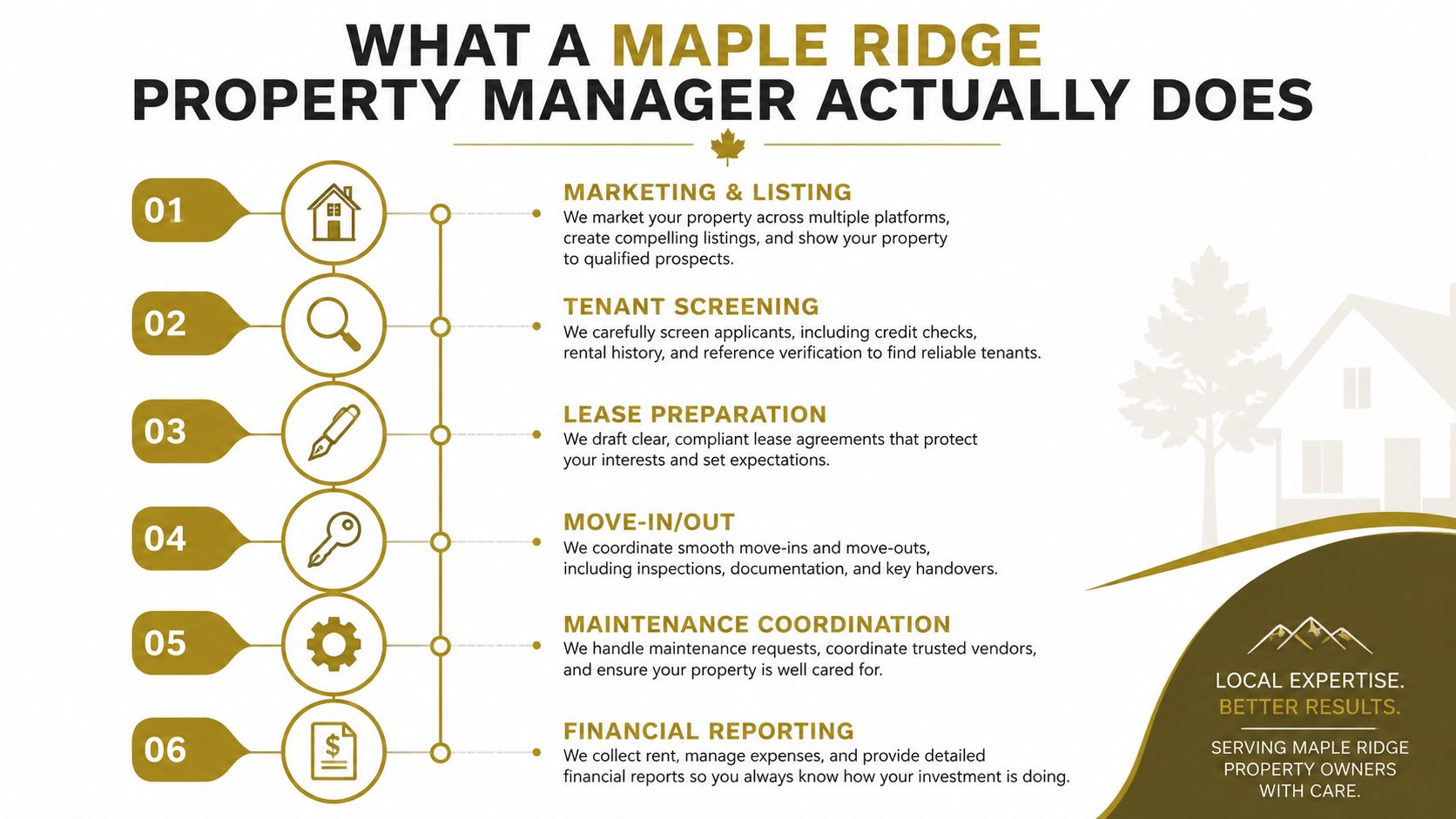
Inspections and move-in or move-out documentation finish the loop. If a tenancy ends badly, a competent manager also handles the process carefully and keeps the record straight. That's what you're paying for, a system that keeps a rental operational instead of reactive.
The Real Cost and ROI of Management in Maple Ridge
The fee gets all the attention, but the fee is not the whole story. In Maple Ridge and the wider BC rental market, professional management commonly costs 8% to 12% of monthly rent, and local guidance says that fee can be offset by fewer vacancies, stronger rent pricing, and fewer compliance mistakes (Brookside PM guide).
That's the right way to look at it. A landlord doesn't pay management fees in a vacuum, they pay them against the cost of empty days, turnover, bad screening, and avoidable repairs. The question isn't whether the line item exists, it's whether the manager protects more income than the fee consumes.
| Line item | Self-managed | Professionally managed |
|---|---|---|
| Vacancy risk | More exposed if marketing and re-leasing lag | Lower when listings, showings, and follow-up are handled quickly |
| Tenant screening | Depends on the owner's process and experience | Structured credit, reference, and landlord checks |
| Compliance errors | Higher if notices and forms are handled casually | Lower when systems and tenancy rules are built into the workflow |
| Maintenance response | Often delayed by owner availability | Coordinated, including after-hours emergencies |
| Net cash flow | Can look better on paper, then slip after mistakes | Can improve if lower vacancy and fewer errors offset the fee |
For a landlord with one or two units, the number to watch is not gross rent. It's what stays in your pocket after one vacancy gap, one botched notice, or one repair that got ignored too long. That's why property management fees in Maple Ridge deserve to be judged alongside the risks they reduce, not by themselves.
A manager pencils out when the property is active enough, risky enough, or time-sensitive enough that one prevented mistake covers a meaningful slice of the fee.
The contrarian truth is simple. Management does not always pay for itself. A long-term tenant in a newer, low-maintenance condo in Kanaka Creek may not justify the fee if the owner is local, organised, and comfortable handling the work personally. But for a typical rental that turns over, needs regular attention, or sits in a tighter compliance lane, the fee is often easier to justify than people admit.
Why BC's Residential Tenancy Act Matters Here
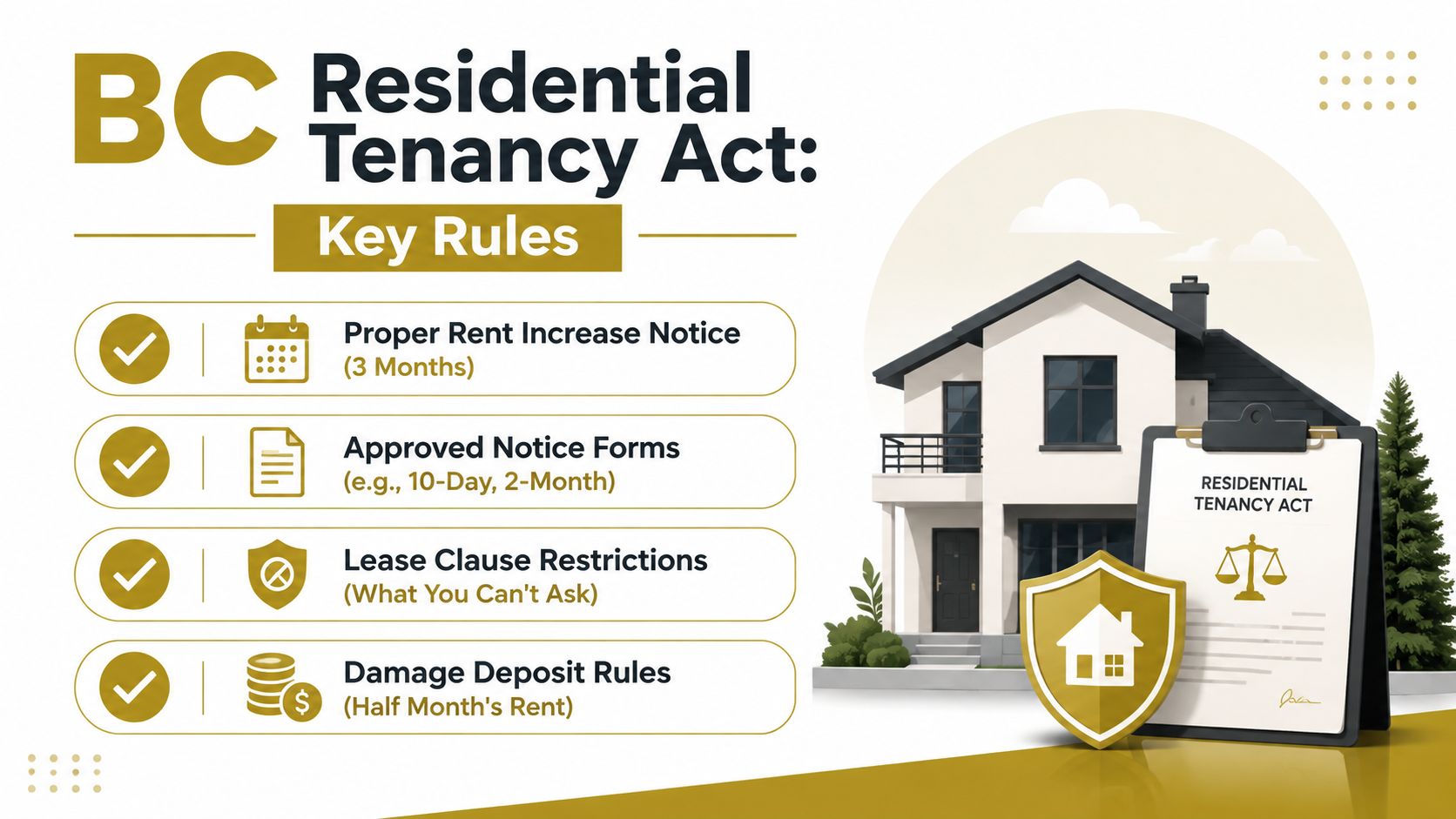
BC is not a loose, informal landlord market. If you get the process wrong, the issue doesn't disappear, it gets slower and more expensive. That's why a local manager's familiarity with the Residential Tenancy Act matters so much in Maple Ridge.
The biggest mistakes are usually procedural, not dramatic. A landlord skips the official notice form, mismanages a damage deposit, or tries to push a dispute forward without enough documentation. Those errors can stall a tenancy issue, create a hearing problem, or force the owner to start over.
The rent side is just as unforgiving. Rent increases have to be issued properly, with the correct notice and timing. Ending a tenancy also has formal steps, which means casual texts and verbal warnings don't replace the actual process.
Practical rule: If you can't show the right form, the right date, and the right paper trail, you're already behind.
That's where local systems beat improvisation. A manager keeps the forms straight, the communication documented, and the process consistent, which lowers the chance of procedural mistakes that cost real money. For a broader explanation of the rules, this BC tenancy law guide is a smart companion read.
This matters after damage or insurance-related events too. When a unit needs attention and there are multiple parties involved, clear documentation helps keep everyone aligned, especially if you're also working with insurance adjusters. In practice, tidy records save time because nobody has to reconstruct what happened from memory alone.
Maple Ridge landlords who treat tenancy law as optional usually learn the hard way. The manager premium is often really a compliance premium.
Two Maple Ridge Scenarios Worth Comparing
One Silver Valley owner tried to handle everything alone. The tenant stopped cooperating, a notice deadline under the Residential Tenancy Act was missed, and the problem dragged into a hearing. By the time it was resolved, the owner had lost far more than a single month's patience. A manager would have caught the deadline, documented the issue, and kept the file moving.
The image below captures the kind of stress that usually appears when a deadline slips and the landlord is left staring at a notice instead of a plan.

The difference wasn't personality or effort, it was process. The owner knew the tenant, but the paperwork side of the job still needed a system. That's the part many first-time landlords underestimate.
A newer Albion owner made a different call. The unit was low-maintenance, the tenant had been stable for years, and the owner lived close enough to stay on top of things. In that case, self-management made more sense, because the 8% to 12% fee would have bought convenience more than protection.
A useful contrast comes from the other side of the coin. This Maple Ridge comparison of self-managing versus hiring management shows why the decision changes with tenancy stability, repair load, and owner involvement.
That second scenario is the honest one people don't talk about enough. Not every rental needs full-service management, and pretending otherwise makes the advice sound salesy. If your property is calm, your tenant is dependable, and you're on top of the details, keeping the fee in your own pocket can be rational.
When Hiring a Property Manager Does Not Make Sense
Start with the obvious cases. A new-build, low-maintenance unit can be straightforward enough to handle yourself, especially if there's a single stable tenant and very little churn. If you live nearby, know the process, and don't mind the admin, full-service management may be unnecessary.
That said, low-complexity today doesn't mean low-complexity forever. A job relocation, an aging parent, or an unexpected vacancy can change the math quickly. Owners often underestimate how fast a simple setup turns into a scramble.
The fee itself is the obvious drag. If the rental is stable and the work is minimal, handing over 8% to 12% of monthly rent can feel like paying for a service you barely use. That's why some landlords are better off staying hands-on, at least for now.
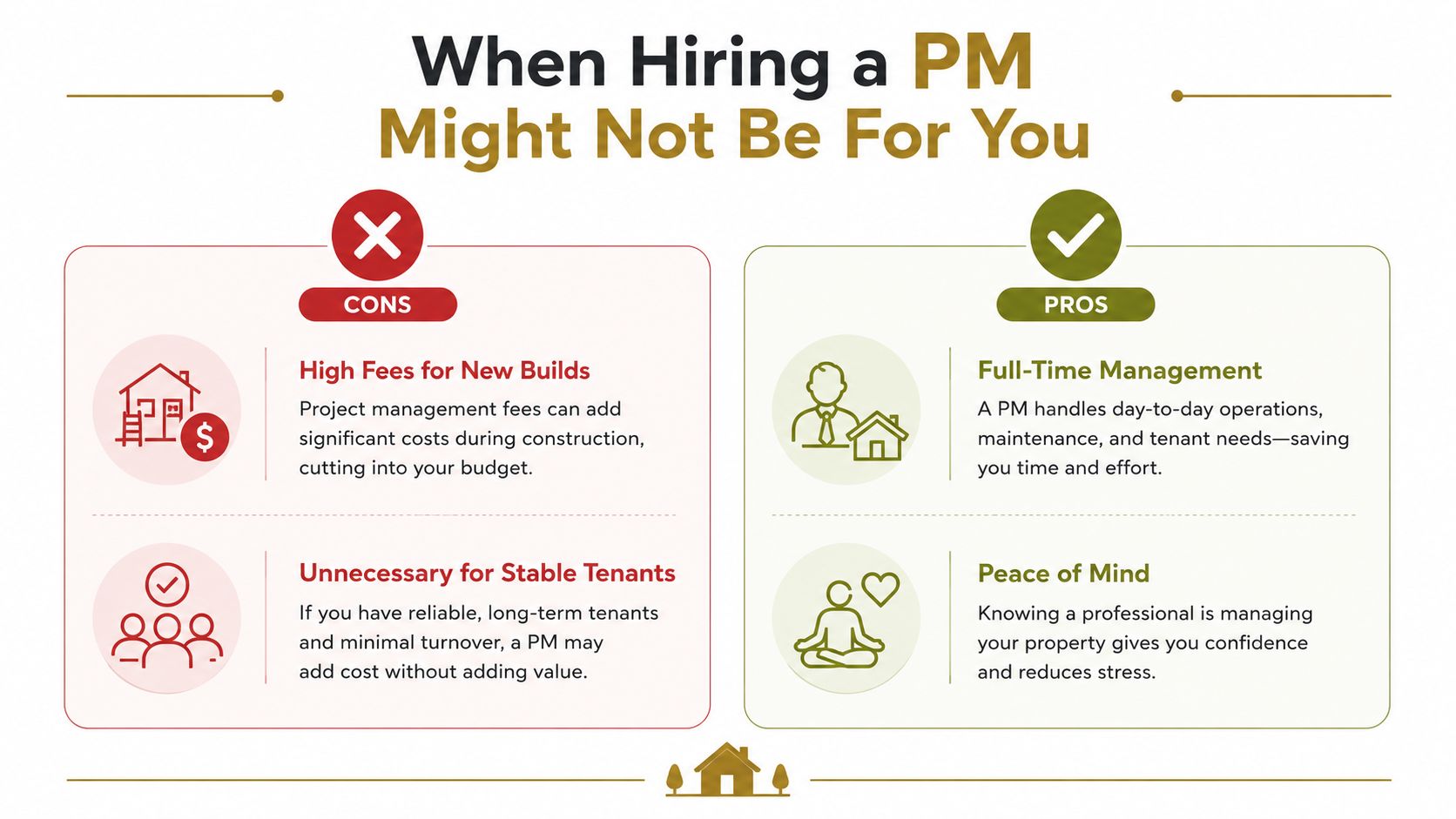
If your property is quiet, nearby, and easy to maintain, management becomes a convenience purchase more than an income tool.
Even then, I'd still talk to a manager before deciding. The point isn't to outsource everything forever. It's to know what support looks like before a problem forces the decision on you.
Choosing the Right Maple Ridge Property Manager and Next Steps
Start with local depth. A manager who works regularly in Maple Ridge and Pitt Meadows should understand neighbourhood differences, tenant expectations, and how quickly good rentals move when they're priced and presented properly. If they can't explain their local portfolio and service area clearly, keep looking.
Next, demand transparency. You want a written fee structure, a clear service-level agreement, and a maintenance process that tells you who approves what, when after-hours calls are handled, and how you'll hear about issues. Ask about the vendor network too, because a strong maintenance bench is part of the job, not a bonus.
For a practical checklist, this guide to finding the right Maple Ridge property manager is a good place to compare questions before you sign anything. Use it to separate polished sales language from actual operating discipline.
A good manager should also tell you when you don't need full service. That honesty matters. It means you're talking to someone who understands the fee has to make sense against your actual rental, not just on paper.
If you own a rental in Maple Ridge and want a straight answer on whether management helps or just adds cost, start a conversation with a local team that knows both the landlord side and the neighbourhood side. Royal LePage Brookside Realty Property Management handles property oversight with a clear process and local market knowledge, which can help you decide whether to buy, sell, or keep the rental you already own.
If you want a direct opinion on your own rental, the team at Royal LePage Brookside Realty Property Management can walk you through the numbers and the practical trade-offs. That's the right next step if you'd rather make a Maple Ridge property decision with real local context instead of guessing.