
If you're staring at a notice in your mailbox in Albion, or you're the landlord in Silver Valley trying to line up a sale, the first question is always the same, how much notice to end a tenancy BC. The frustrating part is that the answer isn't one number. In Maple Ridge, it changes depending on who is ending the tenancy, why it's ending, and whether the notice is being given by a tenant or a landlord under BC's tenancy rules.
That's where people get tripped up. A month-to-month tenant giving notice, a landlord ending a tenancy for family use, and a notice tied to a purchaser's occupancy all sit under different timelines, and the wrong one can unravel the whole move-out plan. BC law treats notice periods as part of the structure of the tenancy itself, not a casual courtesy, which is why a tidy calendar and the right form matter just as much as the reason for the move.
If you're trying to sort through the basics before you pack a single box, our stress-free moving guide is a practical way to keep the logistics organised while you handle the legal side. For a fuller plain-language breakdown of the tenancy framework, the BC Residential Tenancy Act explained is a useful reference point.
Why the Notice Period Depends on Who's Ending the Tenancy
A Cottonwood tenant can get the same question as a Silver Valley landlord, but they are usually dealing with different timelines and different legal triggers. One person is trying to leave on their own schedule. The other is ending the tenancy for a reason the law recognizes. BC law does not treat those situations the same way, so the notice period changes with the direction of the notice and the reason behind it.
Tenant notice and landlord notice are different rules
On the tenant side, the baseline rule stays fairly simple. In British Columbia, a tenant generally gives 1 month's written notice when ending a periodic tenancy, including a month-to-month tenancy, and the notice has to line up with the rental period, according to People's Law. On the landlord side, the timing depends on why the tenancy is ending, which is where errors can begin.
A landlord serving notice for purchaser's occupancy, landlord's own use, major renovations, or cause-based eviction is working from different timelines. That is why the phrase how much notice to end a tenancy BC leads to different answers depending on the facts in front of you, not just the unit address.
Practical rule: Start with the reason the tenancy is ending, then confirm whether the tenancy is periodic, fixed-term, or tied to a specific landlord-use situation.
For a plain-language overview of how the Residential Tenancy Act fits into that structure, the BC Residential Tenancy Act explained gives useful background before you fill out a notice form.
Why local context matters in Maple Ridge
In Maple Ridge, this comes up constantly in basement suites, duplexes, and townhouses. A tenant in Albion may assume they have a month because rent is paid monthly. A landlord in Silver Valley may assume the same thing because they are preparing to sell. Both can be wrong if the reason for ending the tenancy changes the notice period.
That is also where move-out planning starts to break down. If someone is trying to coordinate keys, movers, utilities, and a closing date, the legal notice and the practical move-out date have to match. A written checklist helps keep those pieces in order, and I have seen people stay far calmer when they treat the move like a project instead of a last-minute scramble. If that part is already on your mind, our stress-free moving guide is a practical place to keep the logistics organized while the legal side is still being sorted.
Tenant-Initiated Notice Periods in BC
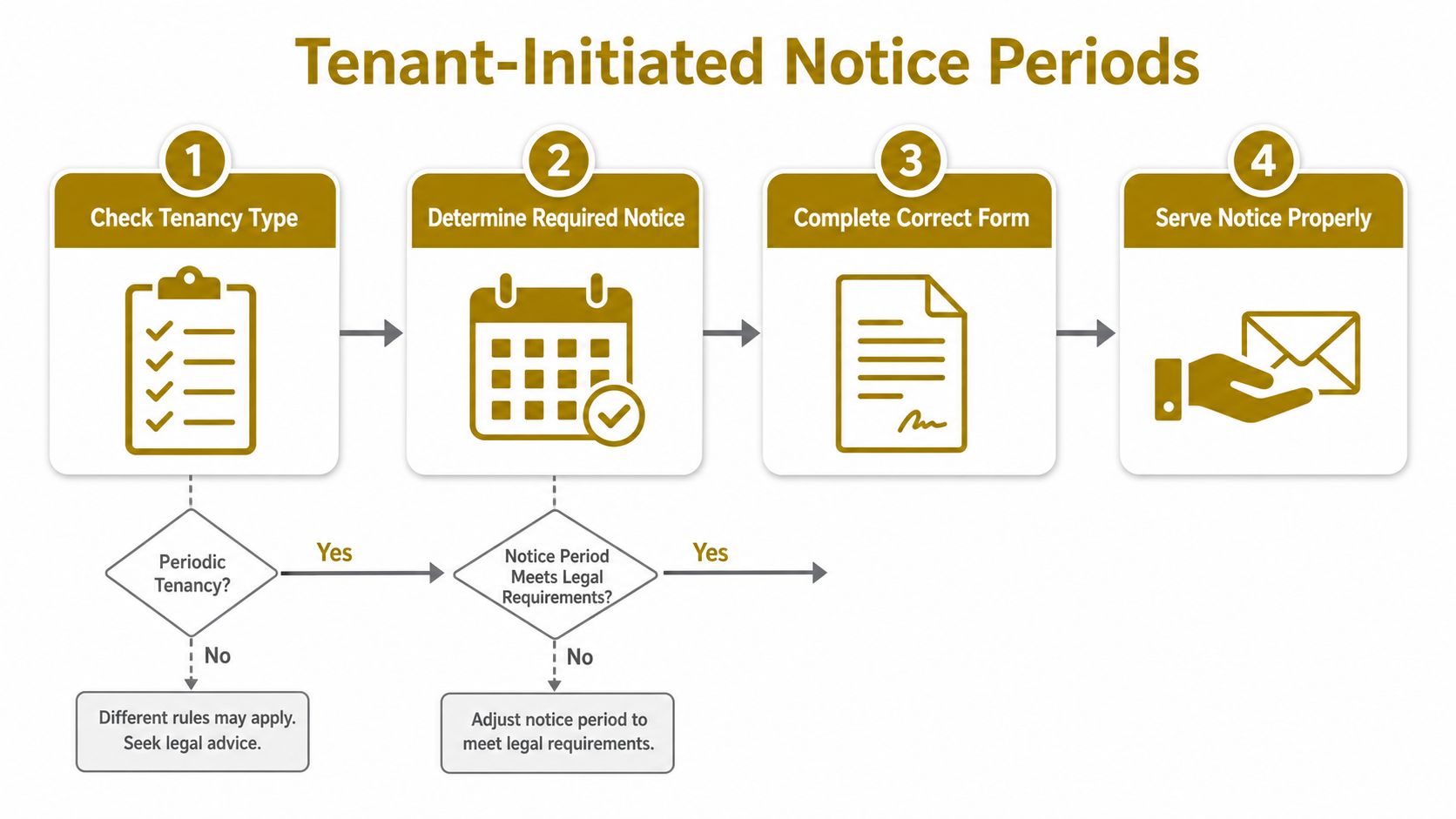
For tenants, the cleanest way to think about notice is this. If you're leaving a periodic tenancy, you usually give 1 month's written notice under BC rules, and that notice has to line up with the end of a rental period. If rent is due on the first, the safest approach is to count backward so the landlord receives notice in time for the last day of the prior month.
Fixed-term and periodic tenancies aren't the same
A fixed-term lease and a periodic tenancy can feel similar in day-to-day life, but they don't end the same way. A periodic tenancy, often month-to-month, is the one that typically uses the one-month notice rule. A fixed-term tenancy may have a set end date, but the move-out date still depends on the contract terms and whether the tenancy rolls over into periodic form at the end of the term.
A tenant can't usually treat a mid-term departure like an ordinary month-to-month move. If someone in Maple Ridge signs a fixed term and decides to leave early, the safest move is to get the situation reviewed before sending a notice that doesn't fit the tenancy type. The wrong date is where a lot of avoidable disputes start.
How to count the notice correctly
Here's the part many renters miss. The notice has to be written, and it has to be delivered properly. It's not enough to text a landlord, leave a voicemail, or mention it casually in the lobby. The notice should identify the unit, the intended last day, and the tenant's signature.
A practical calendar example helps. If a renter in West Maple Ridge wants the tenancy to end on the last day of a rental period, the notice needs to be served early enough for the landlord to receive it before that final month begins. If the timing feels close, it probably is. That's when people get caught out by a late delivery, even when their intent was clear.
Practical rule: The notice period isn't just about the number of days. It's also about the delivery method and the date the notice is actually received.
There are exceptions, including early-termination situations involving domestic violence, but those are special legal pathways rather than the standard move-out rule. For day-to-day planning, tenants are usually safest when they give the notice in writing, keep proof of delivery, and line up the move with the end of a rental period.
For a move-out checklist that matches the legal side with the practical side, the tenant move-out checklist is worth keeping open while you pack.
Landlord-Initiated Notice Periods and the 2024 to 2025 Rule Changes
Landlord notices are where outdated advice causes the most trouble. A file that looked fine under an older rule can be wrong now, and BC has changed enough that landlords need to check the current reason, the current form, and the current timeline before serving anything. I've seen owners in Maple Ridge pull an old template, send it on time, and still end up with a notice that does not hold up because the rule changed underneath them.
A rental in Silver Valley does not get treated differently from one in Albion just because the address sounds local. What changes is the reason for ending the tenancy, and that reason controls the notice period.
The reason for the notice controls the timeline
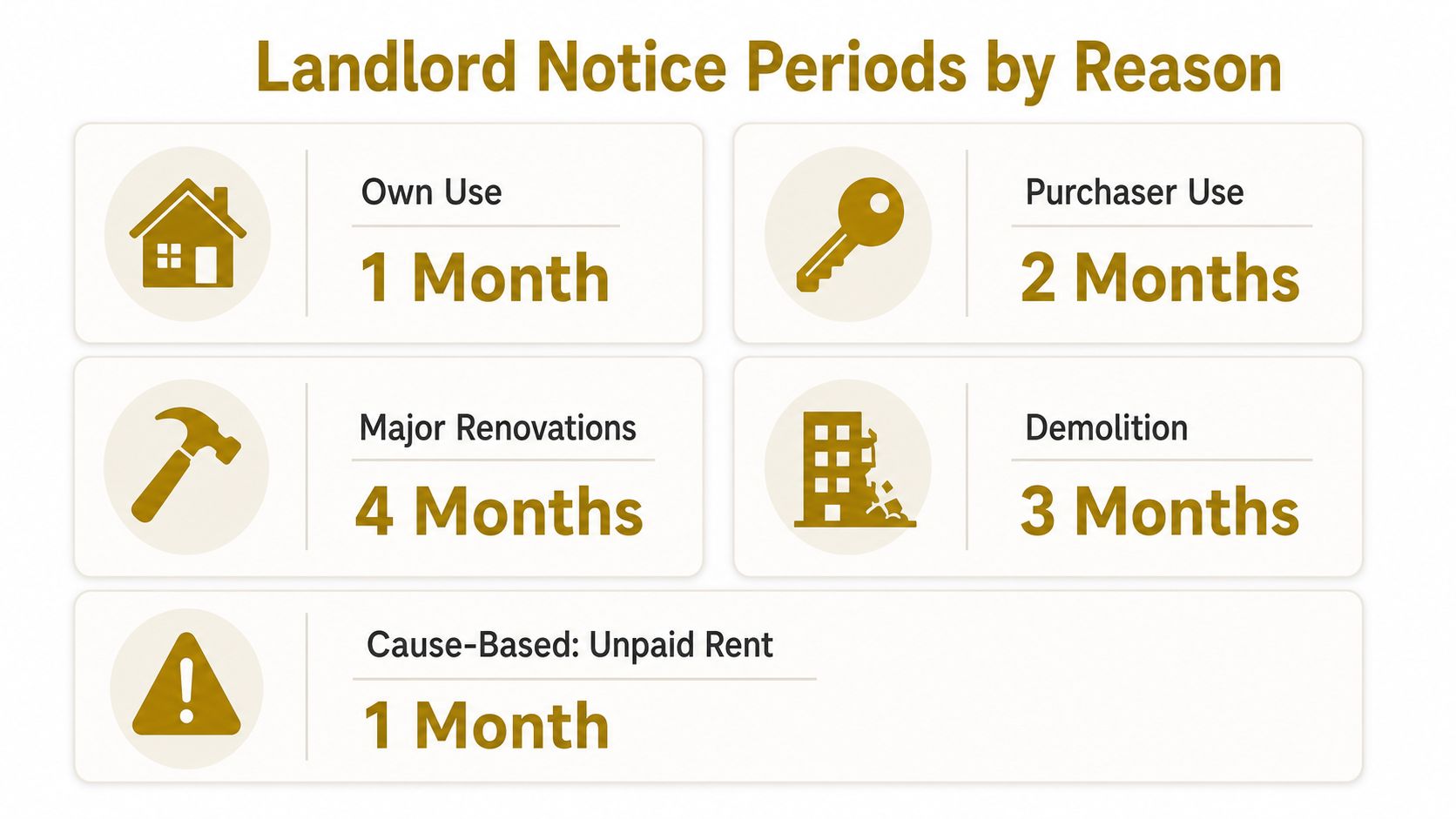
The BC framework separates landlord notices by reason. For purchaser's occupancy, the province says notices generated before August 21, 2024 require 4 months' notice and a 30-day dispute period, while notices generated on or after August 21, 2024 require 3 months' notice and a 21-day dispute period, as set out in the provincial guide on types of evictions.
For landlord's own use, the rule changed again later. As of June 18, 2025, the notice period changed from 4 months to 3 months, and the tenant's deadline to dispute that notice changed from 30 days to 21 days, according to CourtHouse Library's summary of the legislative change. That is the rule to use now, not older sample notices still floating around online.
What still feels familiar, and what doesn't
Some landlord-initiated timelines have stayed in place even though the big no-fault notices changed. BC still uses shorter and longer notice periods depending on the reason, so one general answer will not cover every file. The search phrase how much notice to end a tenancy BC covers very different situations, and that is where owners and tenants often talk past each other.
What matters in practice is simple:
- Own use: now 3 months under the current rule, with a shorter dispute window for the tenant.
- Purchaser use: 3 months for notices issued on or after August 21, 2024.
- Major renovation or demolition-related endings: these remain in the longer-notice category under provincial rules.
- Cause-based evictions: these use a much shorter process and are handled differently from no-fault notices.
Bottom line: A landlord should never use an old template without checking the reason, the issue date, and the current dispute window.
For landlords in Maple Ridge, that can be the difference between a clean file and a notice that has to be redone from scratch. If the tenancy is in a townhouse in Albion or a rental suite in Silver Valley, the reason for ending it has to be documented carefully before the notice goes out.
For owners who want a broader overview of landlord responsibilities and notice strategy, our landlord rights BC guide is a helpful companion.
How to Serve a Notice Properly Using RTB Forms
The notice period is only half the job. The other half is serving the right form correctly, and that's where good intentions often fall apart. In Maple Ridge, I've seen notices delayed because the sender had the right reason but the wrong form, or the right form with the wrong effective date.
Use the form that matches the reason
A notice to end tenancy for landlord use is not the same as a notice for cause. The form must match the legal reason, and it has to include the correct address, names, date, and signature. If the form doesn't line up with the reason, the notice can be challenged even if the landlord's facts are otherwise solid.
The complete guide to the RTB-34 form for BC tenancy disputes is useful when the dispute side of the process starts, because many of the same accuracy issues show up there too.
Serve it in one of the accepted ways
The delivery method matters just as much as the wording. The accepted methods commonly used in tenancy management are:
- In person: Hand the notice directly to the tenant.
- Leaving it at the unit: Use a method that clearly counts as service under tenancy rules.
- Registered mail: Keep the receipt and tracking record.
I always tell owners to keep proof of service, because if a notice is disputed, the delivery record becomes part of the file. A pretty form with no service proof is a weak file.
Common mistakes are usually boring, which is why they're so costly:
- Wrong address: Especially common in basement suites where mailing and civic addresses don't match perfectly.
- Missing signature: A notice without a proper signature can stall the file.
- Wrong effective date: The date has to match the legal timeline, not the moving truck schedule.
- Wrong form: Cause-based and no-fault notices are not interchangeable.
In real property management, the goal is simple. Give the notice on the correct form, serve it in a way you can prove later, and don't assume a verbal conversation will hold up if the tenancy turns contentious.
Maple Ridge Scenarios That Bring the Rules to Life
A basement-suite tenant in Albion gets told the landlord's daughter is moving in. That's a landlord-use situation, so the notice period follows the current own-use rule, not the tenant's usual one-month move-out timeline. The form needs to match the reason, and the landlord has to serve it properly before the tenancy can end.
A townhouse renter in Kanaka Creek learns the unit is being sold. Sale itself doesn't automatically end a tenancy, but purchaser's occupancy does change the timeline if the buyer needs the home. Under the current BC rule, the purchaser-use notice follows the post-August 21, 2024 timeline if that's when the notice is issued, and the dispute window is shorter than many people expect.
A landlord in West Maple Ridge deals with a tenant who hasn't paid rent in two months. That's not a no-fault notice, and it's not handled the same way as landlord use or purchaser use. Cause-based notices move faster, but they still have to be served on the right form, with the right details, or the landlord ends up wasting time.
A retiring couple in Cottonwood wants their Silver Valley property back for a family member with a disability. That's the kind of file where people get emotional and move too quickly. The notice reason has to be genuine, documented, and matched to the current landlord-use timeline. If that part is sloppy, the legal risk goes up fast.
What those scenarios have in common
Each one shows the same pattern. The tenancy type matters, the reason matters, and the form matters. If any of the three is off, the whole process gets harder than it needs to be.
A Whonnock family given a renoviction notice would face a different pathway again, because renovation-related endings bring their own rules, their own proofs, and their own dispute rights. A young couple in West Maple Ridge dealing with a purchaser-use notice needs to look at the issue date of the notice, not just the date on the sale contract, because the timeline can change with the law.
For local owners, that's why the safest move is to slow down before serving notice. A correct notice can end a tenancy cleanly. A rushed one can become the first document in a dispute file.
RTB Dispute Process and What Happens After a Notice Is Disputed
Once a notice is disputed, the clock starts moving quickly. For the newer landlord-use and purchaser-use notices, the tenant's dispute deadline is 21 days under the current BC timelines, while older notices used a longer dispute window in the past. If the tenant misses the deadline, the notice may stand. If they file on time, the matter moves into the Residential Tenancy Branch process.
What the dispute process looks like
The first step is filing the dispute with the RTB and attaching the documents that support the tenant's position. That usually means the notice itself, the tenancy agreement, and any written communications that show what happened. A hearing is then scheduled, and both sides explain their version of the facts.
The RTB dispute resolution guide is a practical follow-up resource because this is the stage where evidence quality starts to matter more than assumptions. In a busy Metro Vancouver environment, the hearing process can feel slower than people expect, especially when the file is detailed or contested.
What can come out of a hearing
The RTB can order a tenancy to continue if the notice was flawed or if the landlord didn't prove the legal basis. It can also deal with remedies tied to the tenancy dispute itself, including compensation issues where the facts support that result. The big mistake is assuming a notice ends everything automatically. If the tenant disputes it properly, the notice becomes part of a legal process rather than a final answer.
Practical takeaway: A disputed notice is not the end of the story. It's the point where documents, dates, and service proof matter most.
That's why both landlords and tenants in Maple Ridge should keep every notice, inspection report, and written exchange. Once the dispute starts, memory is the weakest evidence in the file.
Local Tips for Maple Ridge Landlords and Tenants
Tenants do best when they keep everything in writing. Save the notice, the tenancy agreement, the move-out inspection, and any emails or texts that show what was said and when. If a notice looks wrong, don't ignore it, because silence doesn't fix a bad date or a bad form.
Landlords need the opposite discipline, in the sense that everything has to be checked before the notice leaves their hands. The reason must be genuine, the form must fit the reason, and the effective date must match the current rule. A faulty notice usually doesn't save time, it just forces a reset.
In Maple Ridge, that matters because rental stock varies so much. A suite in Albion, a townhouse near Kanaka Creek, and a family home in Silver Valley can all create different service issues, different documentation habits, and different levels of conflict once a tenancy ends. Good property management is often just careful paperwork, done early.
For owners who want hands-on help with a tenancy, or guidance while they prepare to buy, sell, or hold an investment property in Maple Ridge or Pitt Meadows, the right local advice can save a lot of backtracking. Royal LePage Brookside Realty Property Management is one option for handling tenancy files with the paperwork and timelines kept in order.
If you need help sorting a tenancy notice, planning a move-out, or protecting a rental property in Maple Ridge, visit Royal LePage Brookside Realty Property Management. If you're also weighing a purchase or sale in Albion, Silver Valley, Cottonwood, West Maple Ridge, or Kanaka Creek, their local property management and real estate support can help you make the next move with fewer surprises.