If you're typing “houses for foreclosure near me” at midnight, you're probably not browsing for fun. You're trying to find a deal, a way into the market, or a property that gives you more house for your money without getting trapped in a money pit.
In Maple Ridge, that search deserves a sober approach. Foreclosures here don't work like the auction-heavy guides you'll find for the U.S., and the wrong assumptions can cost you time, legal fees, and a possession date that slips out from under you.
Why Foreclosure Hunting in Maple Ridge Is Different
A lot of buyers land on national foreclosure advice and assume they can just show up, bid fast, and take title. That's not how British Columbia works. In Maple Ridge and Pitt Meadows, the game is the BC Supreme Court process, which means timelines, paperwork, and legal oversight matter more than bravado.
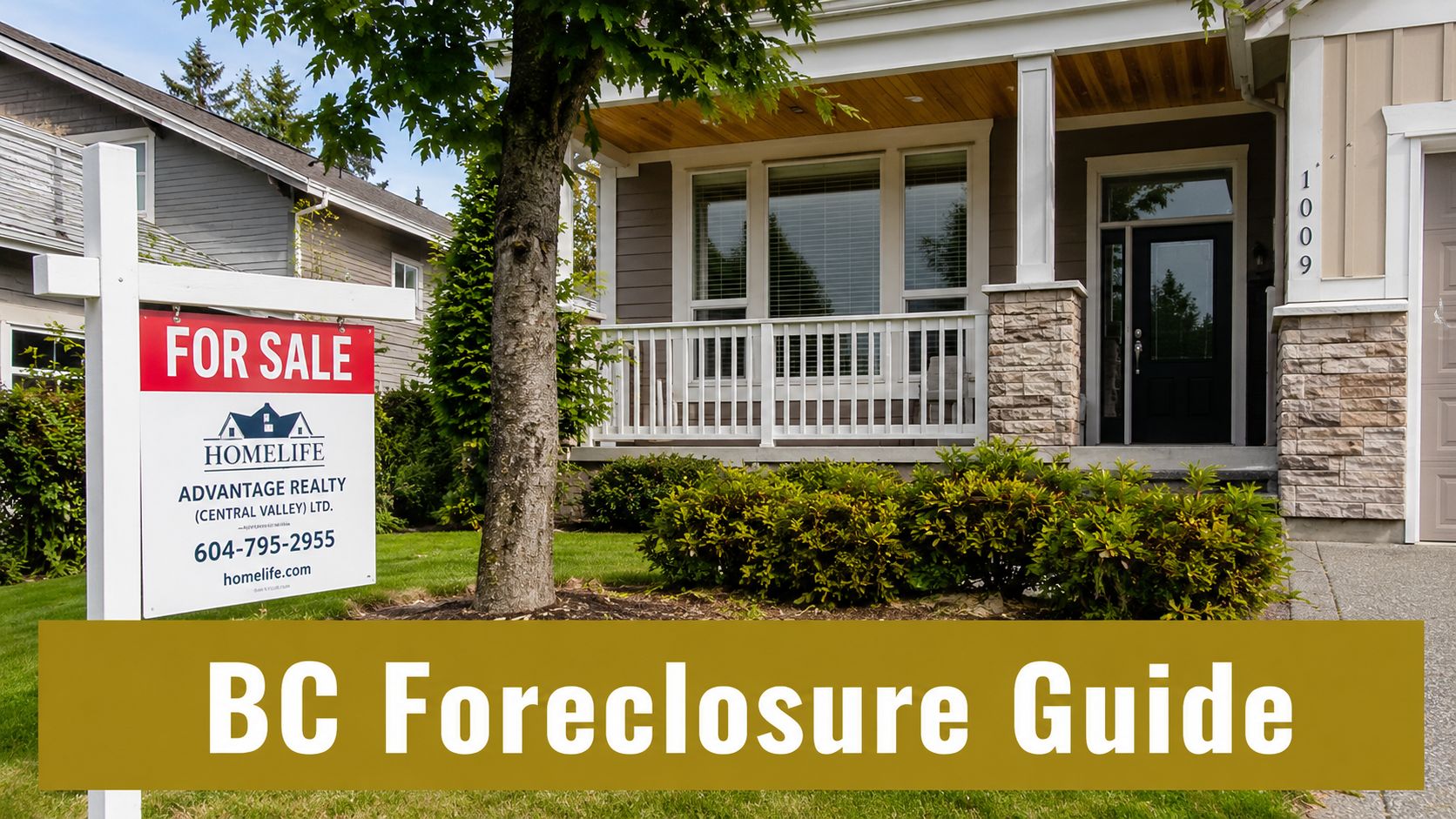
A buyer can find a property marketed as a foreclosure, but that label often hides a lot of moving parts. The listing may still be under court supervision, still subject to redemption rights, or still waiting on a hearing before anyone knows if the offer will stick. That's a very different experience from a simple bank-owned sale.
What BC buyers need to unlearn
You do not need courthouse-steps tactics here. You need a local strategy that respects the court process, the lender's position, and the fact that possession is rarely as clean as a normal sale.
Practical rule: In Maple Ridge, treat every foreclosure as a legal transaction first and a property search second.
For a buyer searching houses for foreclosure near me, the right move is to start with the local market, not a generic auction mindset. A Fraser Valley property might look attractively priced online, but if the court process is still live, your financing, inspection access, and completion date all need extra care. If you want a broader look at local housing inventory, Fraser Valley homes gives better context than a random foreclosure list.
The blunt truth is this. Foreclosure hunting here rewards buyers who are patient, organised, and realistic about legal risk. It punishes people who think every distressed listing is a bargain waiting to be grabbed.
Where to Find Foreclosure Listings in the Fraser Valley
Start with the MLS, but don't stop there. In Maple Ridge, the best distressed opportunities often appear as court-ordered sales, bank-owned listings, or properties flagged by agents who know how to read the signals before the broader market notices them. If you only refresh public websites, you'll miss the better files.
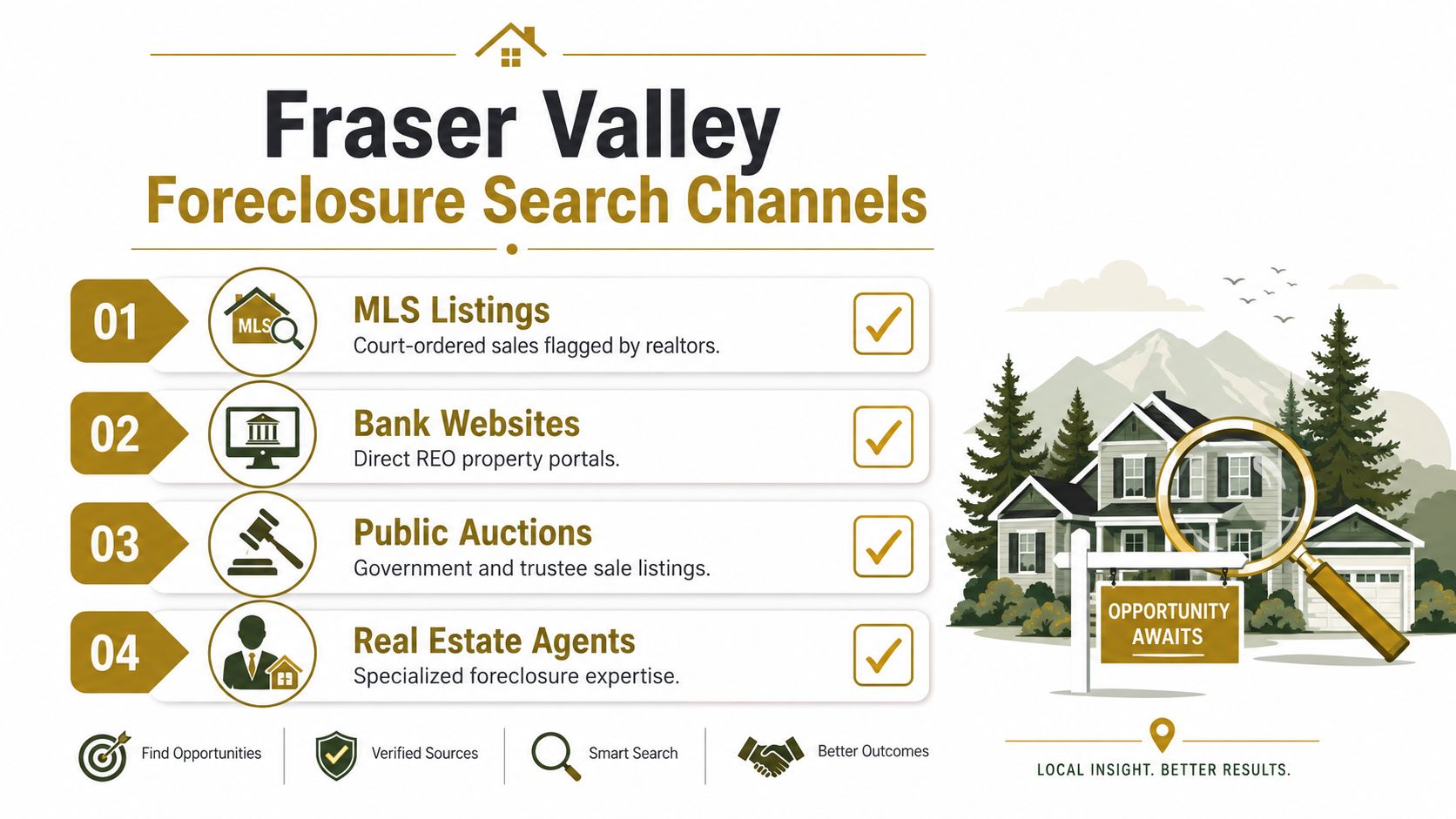
A smart search setup should include filters for court-ordered sale, bank-owned, and distressed remarks tied to possession uncertainty or judicial approval. That matters in neighbourhoods like Albion, Cottonwood, Silver Valley, and Kanaka Creek, where family demand stays strong and the good listings get noticed quickly. If you're comparing local inventory, Fraser Valley real estate listings is a better starting point than relying on one portal.
The channels that actually matter
- MLS alerts. Use saved searches and make the criteria strict. Ask for court-ordered sale language, REO flags, and notes about as-is condition.
- Bank portals. Some lenders surface REO inventory directly, which can move differently from court-supervised sales.
- Public court and registry notices. These tell you what's in motion before it becomes widely marketed.
- A connected local agent. The best access usually lives here, especially for off-market distress that never gets much public exposure.
If you're also looking at financing, fast cash buyers and flippers often rely on specialised lending timelines. A useful resource on fast financing for house flips can help you understand why speed matters when a distressed property becomes available.
The best search behaviour is simple. Set alerts, watch the local court pipeline, and keep one eye on the neighbourhoods where demand stays strong and renovation risk is still manageable.
Evaluating True Cost Beyond the Listing Price
The listing price is the least important number on a foreclosure sheet. What matters is the total cost to own, repair, legalise, and eventually resell the property if you need to. In Maple Ridge, that means you need to think like an owner, not a bargain hunter.

A foreclosure in West Maple Ridge may look appealing because of family appeal and resale strength, but an older vacant home can hide serious maintenance problems. In Kanaka Creek, buyers often care about access to trails and the feel of the area, yet a rough property still needs a renovation budget that respects real-world condition rather than listing optimism. For a practical look at what gets overlooked, Aureli Construction's home inspection guide is worth reading before you write an offer.
Costs buyers underestimate
- Outstanding property taxes. These can follow the sale structure and affect your real entry price.
- Strata obligations. Condos and townhomes can carry unpaid charges, special levies, or lien issues.
- Repairs after vacancy. Empty homes age badly, and deferred maintenance piles up fast.
- Legal and transfer costs. Court work changes the paperwork burden, and paperwork costs money.
A clean-looking foreclosure can still need serious money in the first month. Paint and flooring are rarely the real problem. Water, envelope issues, and outdated systems are what blow up budgets.
If you want a more complete checklist for transaction expenses, closing costs when buying a home in BC helps frame the legal side without pretending foreclosures are simple. That matters even more if the property is in a family-driven neighbourhood where school catchments and proximity to parks shape resale demand.
My view is plain. Never buy a foreclosure in Maple Ridge unless you've already budgeted for repairs you'd rather not find, and you've accepted that the lowest offer price may still be the most expensive house you ever own.
Navigating the BC Supreme Court Sale Process
A foreclosure in British Columbia is not a private bargain between buyer and seller. It's a court-supervised process, and the court controls the pace, the approval, and often the final shape of the deal. If you don't respect that, you'll misread the entire opportunity.
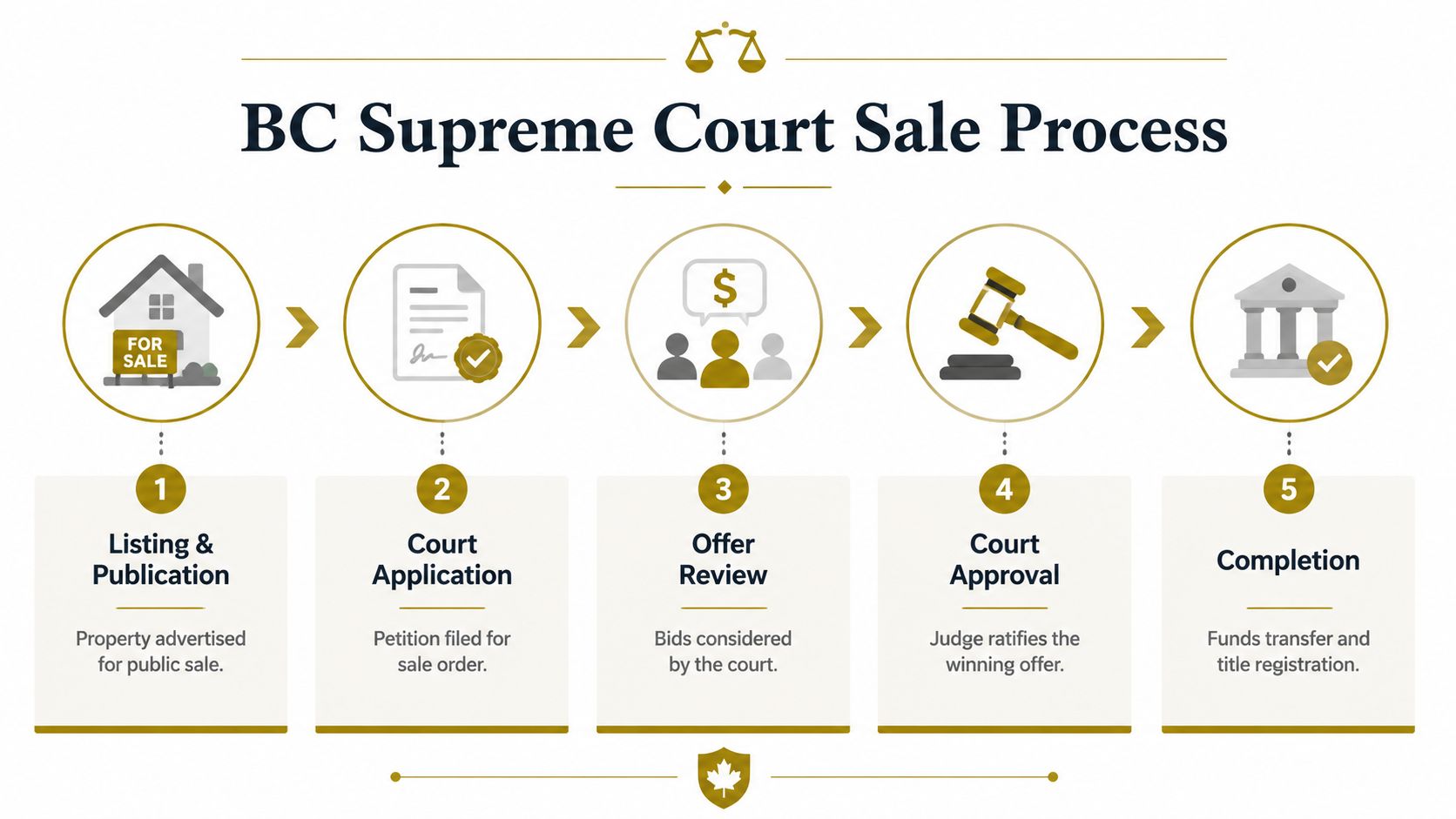
The usual sequence starts with a petition, then a listing, then offers, then a court hearing, and finally completion if the judge approves the result. A buyer may think they're done once an offer is accepted, but that's not true until the court signs off. For a closer look at the legal shape of the transaction, court-ordered sale BC is a useful companion read.
What catches buyers off guard
The first trap is access. You may not get the same inspection rights you'd expect in a normal purchase. The second trap is the redemption period, which means the original owner can sometimes repay and reclaim the property before the process fully closes.
The paperwork also matters. Court-sale offers often rely on addenda that remove or narrow standard buyer protections. That means you need clean financing, fast due diligence, and a clear understanding of what you're willing to live with if the court prefers another bid or adjusts the path to completion.
If the property is good, assume there's competition. If the price looks too easy, assume the court process will test your patience.
This is why out-of-province buyers get burned. They expect certainty, but BC foreclosure sales reward people who can move quickly without assuming the possession date is locked in until the very end. If your moving truck, financing, or renovation crew can't tolerate slippage, you need to build that into the offer from the start.
Preforeclosure Negotiation Versus Court Sales Versus Bank REO
A buyer who treats every distressed listing the same in Maple Ridge usually pays for that mistake. Preforeclosure, court sales, and bank REO each reward a different kind of buyer, and the wrong choice can mean missed inspection time, ugly legal surprises, or a closing that drags on longer than your financing can tolerate.
| Criteria | Preforeclosure | Court Sale | Bank REO |
|---|---|---|---|
| Price flexibility | Higher, because the owner may still want a private solution | Limited, because the court process shapes the outcome | Moderate, depending on the lender's inventory strategy |
| Timeline certainty | Lower at first, because the file can change fast | Mixed, because court approval and redemption can shift timing | Higher than court sale, usually cleaner once the bank owns it |
| Property condition visibility | Often better if you can negotiate access | Often restricted, so you're buying with less clarity | Usually better than court sale, but still sold as-is |
| Financing complexity | Can be simpler if it's a normal sale | More demanding, because the court process adds steps | Often cleaner than court sale, but still needs diligence |
| Competition | Can be quiet, but sensitive to timing | Can be intense when a good file hits MLS | Can attract buyers who want a more straightforward transaction |
Preforeclosure gives you the best shot at a negotiated deal. The owner may still be looking for a private sale, and that opens the door to better access, more normal contract terms, and a cleaner inspection process. In practical terms, that matters in Maple Ridge, where older homes in Albion or Silver Valley can hide repair issues that do not show up in a listing photo.
Court sales are the opposite. You are buying into a court-supervised process, so timing, access, and offer structure are all tighter. If you want to understand how the borrower's side of that file can affect timing, LifeBack Law Firm foreclosure guidance is useful because it shows why the owner's response can change the path of the case. That is exactly why court sales can look simple on the surface and still become messy in practice.
Bank REO sits in the middle, and often feels cleaner than a court sale because the lender already owns the property. The closing structure is usually more straightforward, but buyers still need to assume as-is condition and do their own due diligence. For more on that option, see our guide to bank-owned homes for sale.
My advice is straightforward. Choose preforeclosure if you want room to negotiate and can move quickly. Choose court sales if you are chasing the most upside and can tolerate uncertainty. Choose REO if you want the least complicated path among the three, while still accepting that distressed property rules still apply.
How a Local Maple Ridge Agent Protects Your Investment
Foreclosure deals punish amateurs. Access is limited, disclosure is thin, and court timelines can shift without warning. A local agent who knows Albion, Silver Valley, and the rest of Maple Ridge keeps you from making expensive assumptions.
A good buyer's agent does more than open doors. They pressure-test the addenda, push for whatever inspection access is available, and line up the lawyer, contractor, and lender conversations before you commit. They also know which pockets of the city sell better after renovation, especially near schools, parks, and commuter routes.
The cheapest mistake in a foreclosure purchase is thinking you can improvise the legal side later.
That's the distinct advantage of local experience. A seasoned Maple Ridge realtor can tell you when a property's condition, location, or court structure makes it a strong opportunity, and when it's just a problem dressed up as a discount. In a market like this, that judgement is worth far more than a generic online listing search.
If you're weighing a foreclosure purchase in Maple Ridge or Pitt Meadows, talk to a local team that handles the details before they become expensive surprises. Royal LePage Brookside Realty Property Management works with buyers and owners who need straight advice, local judgement, and practical support around distressed properties, renovations, and long-term value. Visit Royal LePage Brookside Realty Property Management to connect with a local professional before you make your next move.