

If you only know Mission as a pretty Fraser Valley stop with mountain views, you're missing the part that matters in 2026. The town is still scenic, and it still has the kind of setting that pulls families, downsizers, and investors in, but the primary decision now is less about the view and more about what kind of home life Mission can support. Buyers and sellers are dealing with a market that's grown up, become more competitive in some ways, and more supply-rich in others, which means the old postcard version of Mission doesn't do the city justice.
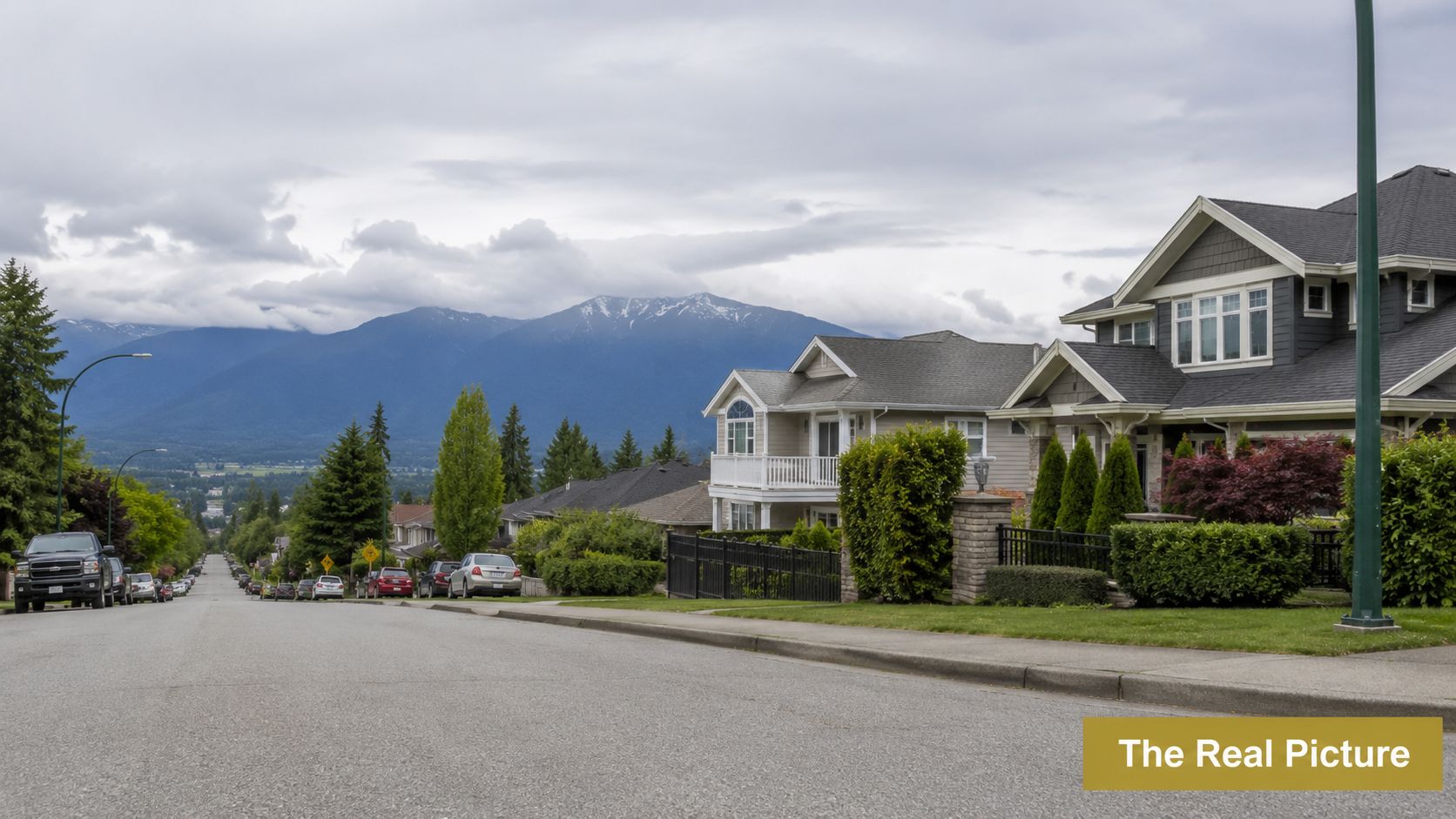
The honest conversation starts with the fact that Mission is no longer a small, sleepy housing market. One neutral local profile places the city's population at 86,234 in 2023, up from 83,567 in 2019, while median home value rose 43.1% over the same period, from $112,400 to $160,800 (local demographic profile). That growth matters because it changes who can buy, what they can afford, and how much pressure lands on rentals.
There's also a bigger quality-of-life split underneath the surface. A local satisfaction survey summary says residents still rate parks and recreation at 84%, but concerns around infrastructure, housing variety, and safety are louder than they used to be (Mission City social development page). Mission has become a place where lifestyle appeal is real, but so are the trade-offs.
For a broader view of the city's identity and housing context, I'd also point readers to this local overview of the market and lifestyle: Mission real estate and community profile. That's the lens I'd use if I were buying here myself, a good location is only worth it if the day-to-day fit works.
Mission's Current Livability Picture
Mission still sells itself easily. The natural setting is strong, the community has grown, and the city remains attractive to buyers who want more breathing room than they'll find in Metro Vancouver. The harder truth is that Mission in 2026 is shaped as much by housing demand, service capacity, and neighbourhood choice as it is by scenery.
Scenic appeal still draws people, but it does not solve the housing mix
Mission has matured into a more established housing market, and the local numbers show why buyers keep paying attention. One local profile puts the city's homeownership rate at 71.5%, with median household income at $60,813 and median gross rent at $931 (US Civic Data Mission profile). That mix says a lot about the market: ownership remains the anchor, while renters face real pressure because the rent side of the equation is tight.
The housing stock is also part of the story. Mission's own social development material says the city needs more purpose-built rental, more affordable rental apartment units, and fewer single-family dwellings (Mission social development page). That is not a cosmetic gap. It means the city's housing choices are not matching the range of households that need to live here, especially people trying to buy their first place, rent long term, or downsize without leaving the community.
That mismatch shows up fast in real life. If the supply is weighted too heavily toward one type of home, the pressure spreads into rentals, entry-level ownership, and move-down options for older owners who want to stay local. For buyers, that means the right property type matters as much as the address. If you are weighing that trade-off, it helps to review a grounded local overview like this Mission real estate and community profile before chasing listings that do not fit your household.
Livability here is uneven, and residents know it
Mission residents are not describing a broken city. They are describing a city with uneven service levels and real pressure points. The local satisfaction survey coverage says people still rate parks and recreation well, but infrastructure, homelessness, crime, and substance use keep coming up when residents talk about what makes daily life harder (Mission City Record coverage of the satisfaction survey). That is the part glossy neighborhood guides leave out.
The result is a city where the lifestyle appeal is genuine, but the fit depends on the household. A family with school-age kids, a commuter who needs predictable travel, a buyer looking for a detached home, and a renter trying to find something affordable will all experience Mission differently. browse CozyCube's dealer tips if you want a separate example of how buyers are getting more selective about housing form and long-term fit. A pretty setting does not cancel out poor product fit, and in Mission that trade-off is shaping more decisions every year.
Mission Housing Market Trends and Pricing
Mission is in a different phase now. Inventory has expanded, homes are taking longer to sell, and pricing needs to be handled with more discipline than it did when the market was tighter. That's good news for buyers who've been waiting for an advantage, and it's a warning for sellers who still want to price as if supply is scarce.
For a useful side-by-side view, here's the current market snapshot:
| Metric | Current Value | Year-over-Year Change |
|---|---|---|
| Active listings | 1,357 | +13.08% |
| Median listing price | $279,000 | -4.12% |
| Median price per square foot | $152 | Not stated |
| Median days on market | 74 | +10.45% |
| Median rent | $1,250 per month | Not stated |
| 3-year active listings change | Not stated | +68.40% |
| 3-year days on market change | Not stated | +34.55% |
Those figures come from a local housing-market snapshot (Realtor.com Mission market page). The clear read is that Mission has entered a more supply-rich phase, which usually means buyers can be choosier and sellers need to be sharper.
What that means in plain English
More inventory changes behaviour on both sides of the deal. Buyers get more room to compare neighbourhoods, property types, and finishes, while sellers lose the benefit of assuming the first offer will be the best offer. When homes sit longer, list price becomes a strategy instead of a wish.
That's why list-price precision matters so much right now. A home that is only a little too ambitious can get ignored, then chase the market downward. A home priced correctly can still move, but it needs to be presented well, supported by clean comparable sales, and positioned against the actual competition rather than last year's headlines. For a wider local read on the pace of housing in the region, I'd also keep an eye on this market note: quiet start to 2026 in Metro Vancouver housing.
Affordability still has real upside
Mission remains meaningfully cheaper than many buyers expect. One local cost-of-living profile places the city's index at 86 to 90, below the national baseline of 100, and estimates median home value at roughly $165,761 to $220,634 with median rent around $699 to $950, depending on the dataset used (AreaVibes Mission cost of living). That same data points to a home-value-to-income ratio near 3.6x, which is one reason some households find Mission easier to qualify for than higher-cost markets.
The smartest buyers aren't just comparing sticker price. They're comparing payment comfort, product type, and holding costs. Mission can still be a value market, but only if you buy the right home at the right price and accept that “value” and “cheap” are not the same thing.
Neighbourhood Breakdowns for Every Lifestyle
Mission works best when you stop thinking of it as one market. Different pockets suit different households, and the right choice depends on whether you care more about commuter access, outdoor space, established streets, or lower-maintenance ownership. If you're shopping blindly, you'll overpay for features you don't use and miss the areas that fit your life.

Heritage Park for families and West Mission for commuters
Heritage Park is the kind of area that makes sense for buyers who want a more family-oriented setting with the usual detached-home appeal. It's the practical choice for people who want space, a yard, and a more settled residential feel. If school routines, weekend sports, and future resale matter, this is the type of area that deserves a close look.
West Mission plays differently. It suits commuters who want an easier day-to-day drive and don't need the bigger lot lifestyle to justify the purchase. If you're comparing detached houses with townhomes, or just want less maintenance without giving up ownership, West Mission often deserves a visit before you stretch your budget elsewhere. For buyers weighing attached housing, this local resource is worth a look: townhouses for sale in Mission.
The mistake I see often is buyers choosing a neighbourhood for the listing photos instead of the commute, school run, and maintenance load they'll actually live with.
Hatzic for nature lovers and Downtown Core for people who want convenience
Hatzic is the obvious pick for buyers who want a stronger connection to nature and don't mind a quieter rhythm. If your ideal Saturday includes trails, water access, or more breathing room, that part of Mission tends to reward patience and a careful search. It's the most lifestyle-driven option here, and that's exactly why some buyers will love it and others won't.
Downtown Core suits younger professionals and anyone who wants convenience over space. It's the place to focus if you value quick errands, a more walkable daily routine, and access to the town's practical amenities. You give up some privacy and yard size, but you gain simplicity.
For buyers thinking about compact living or alternative housing formats, it's also worth learning how tiny-home dealers approach product choice and site fit. The broader point is the same: in Mission, property type matters as much as address, so browse CozyCube's dealer tips before you assume a smaller home won't meet your needs.
Housing Affordability and the Rental Reality
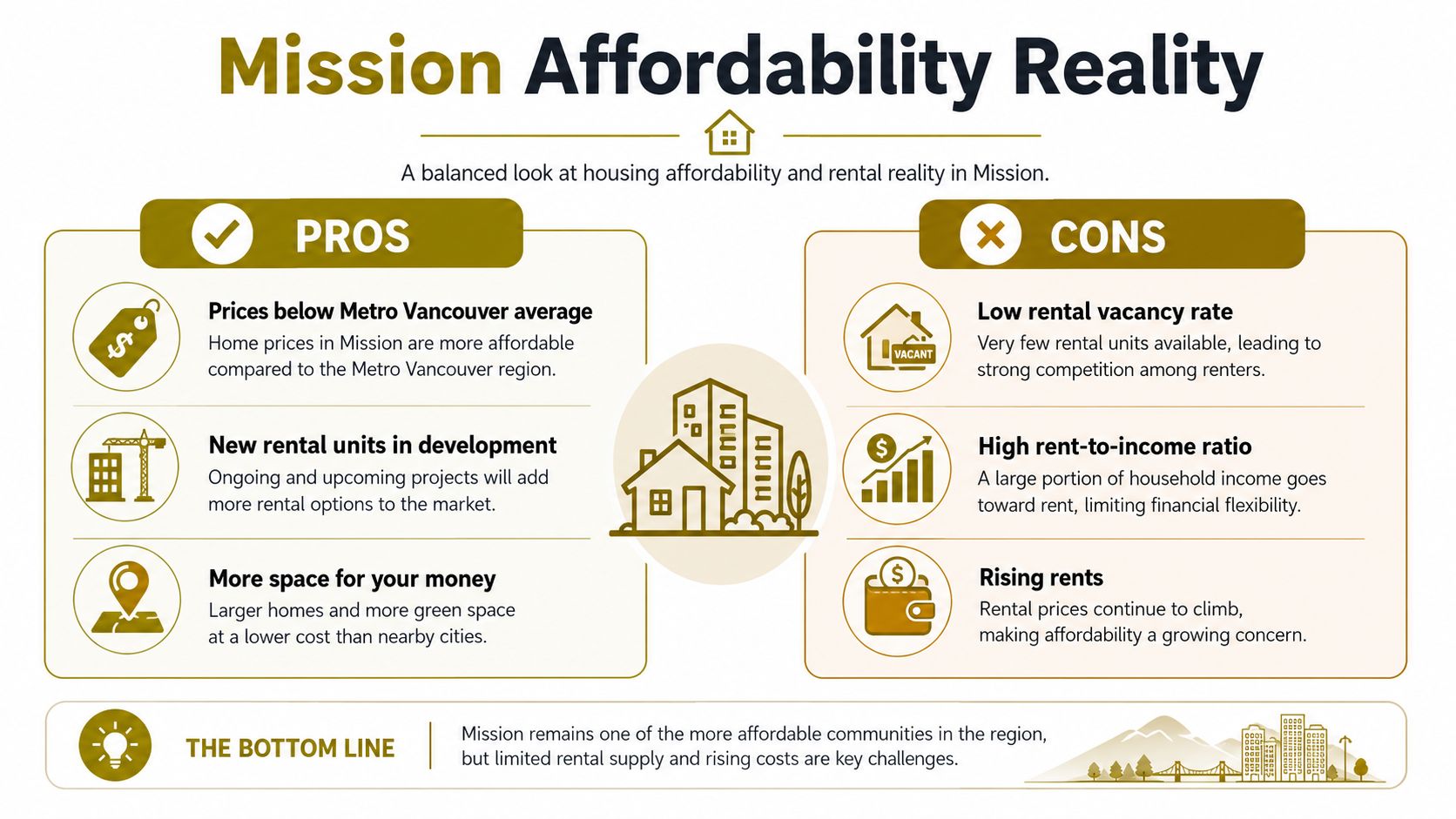
Mission's affordability story is real, but it only makes sense if you look past sale prices. The harder question is whether the local housing mix gives people room to stay in the community as their needs change. That is where the mismatch shows up, especially for renters, first-time buyers, and downsizers.
The housing stock leans one way
Mission's own social development position is blunt. The city needs more purpose-built rental, more affordable rental apartment units, and fewer single-family dwellings. That tells you the market still leans heavily toward the detached-home model, even though many households no longer live that way.
That imbalance matters in practice. Renters feel it first because limited choice keeps pressure on the units that do come up. First-time buyers feel it when detached homes sit out of reach and townhomes or condos become the only realistic entry point. Downsizers feel it when they want to stay local but do not want the upkeep that comes with a larger property.
For a policy lens on why this matters, read the guide to housing affordability policy. The point is simple, supply shape matters as much as supply count.
Lower housing costs do not erase utility pressure
Mission's lower housing costs can make the monthly payment look manageable, but the full budget still needs a hard look. One local source notes that utilities sit around the national level or higher, with utility indices reported at 100 to 106 and electricity priced around 10.3¢/kWh or monthly electricity cost near $221.71 (Kurby Mission living costs). In a hot climate, that matters.
Do not underwrite only principal and interest. If you are buying here, especially in a home that will need more cooling, you need to think in full-household terms, not just mortgage terms.
For renters, the pressure is even clearer. Mission's rent figures in the verified data range from $699 to $1,250 depending on source and dataset (Livability Mission profile and Realtor.com local market data). That spread reinforces the same point, housing choice in Mission is uneven, and the right fit depends on more than headline affordability.
I would also keep an eye on this local rent-market discussion, B.C. rents plummet and shifting market dynamics, when comparing opportunities. Rental affordability only feels manageable when supply and product type line up with what people need.
Schools, Parks, Recreation and Daily Commute
Mission works for a lot of families because the daily routine is manageable if you pick the right pocket. School drop-offs, weekend sports, parks, and commute planning all shape whether the city feels easy or frustrating. People who get the routine right usually love it, while those who don't end up spending too much time in the car or too much money on the wrong kind of home.
What families notice first
Niche describes Mission as a sparse suburban community where most residents own their homes, says there are a lot of parks, and rates the public schools as above average (Niche Mission profile). That combination explains a lot of the demand here. Families want the room, the parks, and the sense that the area still feels grounded rather than overbuilt.
The stronger read from local satisfaction data is that people continue to value recreation heavily. Mission's parks and recreation score sits at 84%, which is a meaningful signal because it shows residents still see outdoor amenities as one of the city's strongest assets (Mission City Record survey coverage). For families, that means weekends don't have to be complicated. The city's built-in advantage is still the ability to get outside without turning every outing into a production.
Commute reality is part of the decision
Mission isn't a city you choose for effortless transit. AreaVibes lists an average one-way commute of 21 minutes, while Livability gives an average commute of 19 minutes (AreaVibes Mission livability and Livability Mission profile). Those numbers aren't bad, but they do remind you that a car-first routine is still the norm.
That matters if one partner works outside the city, or if the household has school schedules, shift work, and after-school activities to juggle. People who buy here without thinking about route patterns often regret it later. The commute isn't dramatic, but it is a real part of the cost of living.
A good Mission purchase usually saves time in the routine, not just money on the mortgage.
If you want a home that works, prioritize school access, park access, and route simplicity before you obsess over cosmetic upgrades. That approach will serve you better than chasing the prettiest listing in the wrong location.
Honest Pros and Cons of Making Mission Home
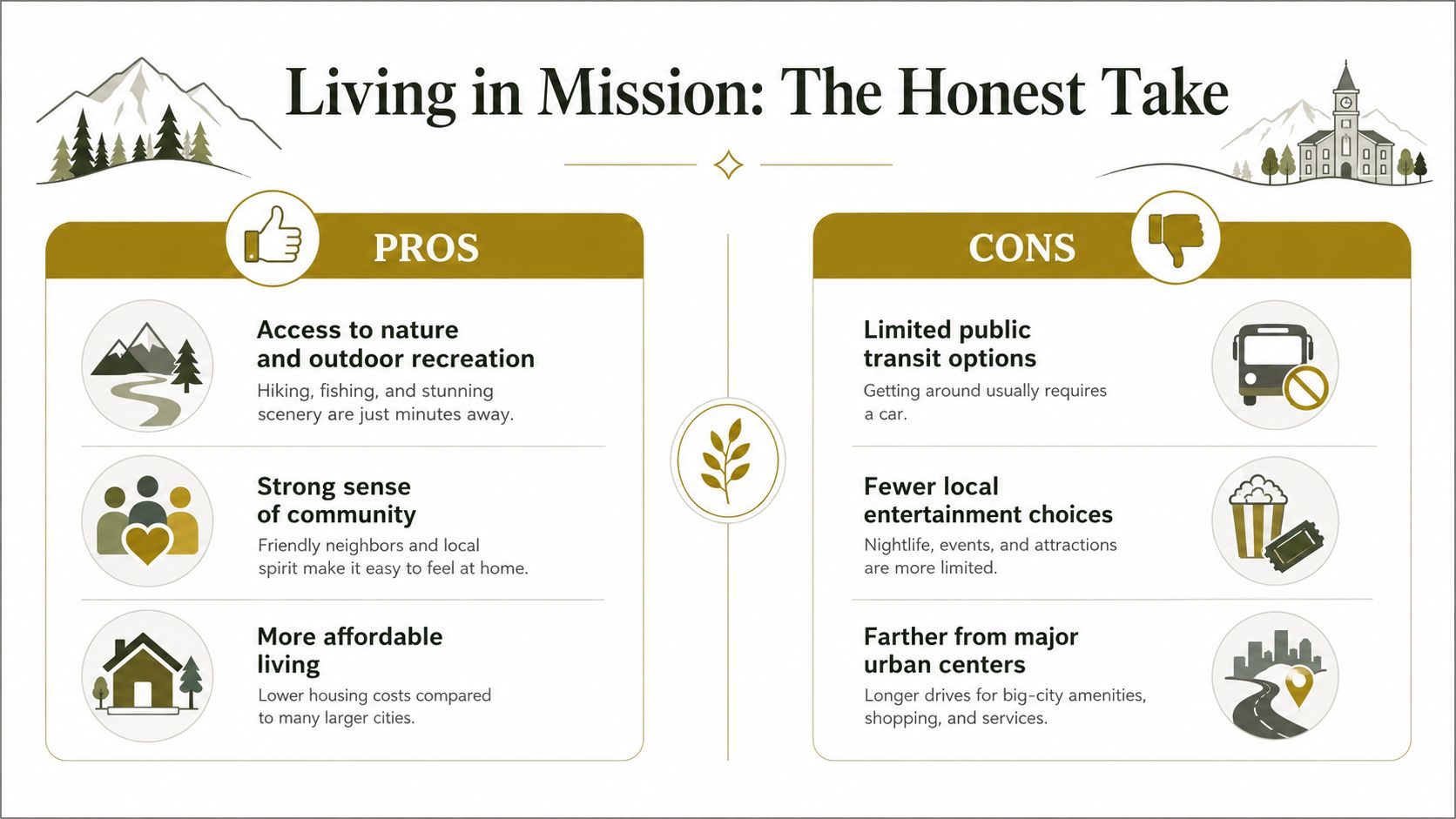
Mission is easy to like and hard to romanticize. That's exactly why it's worth taking seriously. The city gives you a strong outdoor lifestyle, a real sense of community, and a lower-cost housing profile than many buyers expect, but it also asks you to accept infrastructure strain, a thinner housing mix, and fewer built-in conveniences than denser urban areas.
Why people stay
The strongest pro is still the setting. Mission gives buyers a place that feels less compressed, and that has real value for families, outdoor-minded residents, and anyone tired of paying Vancouver prices for every square foot of space. The city's ownership rate, parks score, and established neighbourhoods all support that appeal (US Civic Data Mission profile and Mission City Record survey coverage).
Another advantage is that the market still offers a meaningful affordability edge compared with higher-priced urban alternatives. Even where local prices have risen, Mission remains a place where some buyers can still get into ownership without taking on the same level of financial strain they'd face elsewhere (AreaVibes cost of living).
Why some buyers hesitate
The cons are just as real. Mission's own city materials call for a broader housing mix, which is a polite way of saying the current stock does not fit everyone well (Mission social development page). Residents also continue to raise concerns about infrastructure, safety, and service capacity, and those concerns affect how some people judge the city's future.
I'd treat Mission as a strong fit for buyers who value land, lifestyle, and a more grounded pace. I'd be cautious with anyone who wants dense amenities, easy transit, or a wide range of rental choices right now. Those buyers can still live here, but they need to choose carefully and accept the trade-offs.
The fair conclusion is simple. Mission is a good place to live if you buy for the right reasons. It's a frustrating place to live if you expect the scene to do all the work for you.
Buyer and Seller Tips for the Current Mission Market
Mission's current market rewards people who are prepared, not people who are sentimental. Buyers have more choice than they did when inventory was tighter, and sellers need to understand that homes are competing on price, condition, and presentation. If you approach the market like it's still 2021, you're going to miss the opportunity in front of you.

Buyers should use the extra inventory
Start by looking at more than one neighbourhood. With 1,357 active listings and 74 days on market reported in the local snapshot, buyers have room to compare and negotiate instead of rushing into the first acceptable home (Realtor.com Mission market page). That doesn't mean you should lowball every listing. It means you should be selective and patient.
Focus on value in the product, not just the address. Older homes can still offer the best entry point if the structure is sound and the location works. Detached homes may fit some families, but townhomes or condos can be the smarter move for buyers who want lower maintenance and better budget control. If you're browsing efficiently, this guide helps you search with more discipline: how to search for homes on MLS in Mission, BC.
Practical rule: In a softer, more balanced phase, the best offer is often the one that pairs fair price with clean conditions and realistic expectations.
Sellers need to price for the market they have, not the one they remember
Sellers should stop treating list price as a test of optimism. The market snapshot shows median listing price down 4.12% year over year, while inventory has climbed and days on market have stretched (Realtor.com Mission market page). That combination means overpriced homes are the ones most likely to stall.
Do the basics well. Clean, declutter, repair obvious issues, and make the property feel easy to buy. If your home has a strong natural setting, highlight it. If it has functional updates, present them clearly. If you want real estate help that includes rental support as well as buying and selling, Royal LePage Brookside Realty Property Management handles landlord support and rental services alongside residential real estate, which can matter for owners deciding whether to hold or sell.
The sellers who win in Mission right now are the ones who respect the buyer's options. The buyers who win are the ones who understand that their advantage only helps if they use it on the right house.
If you're weighing a move in or out of Mission, Brookside Realty can help you look at the numbers, the neighbourhood fit, and the rental side of the equation with less guesswork. Visit Royal LePage Brookside Realty Property Management to talk through buying, selling, or managing property with a local team that understands how Mission really works.