

You're standing in a Maple Ridge kitchen, boxes stacked by the door, and the seller is still finishing paint touch-ups while your movers are booked for 9 a.m. the next day. That's the moment many people realise the closing date vs possession date question isn't paperwork trivia, it's the difference between a smooth handoff and a very expensive headache.
In BC, these two dates are deliberately separate in many contracts. Completion is the legal transfer, possession is the physical handoff. If you're buying in Silver Valley, Albion, Cottonwood, or West Maple Ridge, you need to treat them as two different moving parts, because they affect keys, insurance, utilities, movers, and liability in different ways. Get them wrong and you end up paying for confusion you could've prevented.
| Date | What it really means | Who has control |
|---|---|---|
| Completion date | Title transfers and money changes hands | Buyer becomes legal owner |
| Possession date | Keys are handed over and the buyer can move in | Buyer gets physical access |
The 24 Hours That Trip Up Most Buyers and Sellers
You're in a Silver Valley townhouse the day before completion. The buyer's movers are locked in for 9 a.m., the seller is still touching up baseboards, and everyone assumes the other side has the timing under control. That's how people end up angry on a day that should be routine.
In British Columbia, the practical reason for the separate dates is simple. Completion is the legal and financial transfer, while possession is the moment the buyer walks through the door. BC legal guidance says realtors generally recommend writing the contract so completion is at least 1 day before possession, and another BC real-estate source says possession is usually set for the day after completion. That small gap protects both sides from a same-day scramble where title has to settle, money has to move, and the seller still needs time to clear out.
The key mistake buyers make is assuming ownership and access are the same thing. They aren't. The buyer may legally own the home after completion, but still can't move in until possession starts. That matters when you're lining up movers, booking temporary storage, or trying to coordinate a school-week move near Maple Ridge Secondary or a family home near Kanaka Creek.
Practical rule: Don't book movers off the closing date alone. Book them off the possession time written into the contract.
A seller's mistake is the opposite. They think “we've completed, so we're done.” Not true. Until possession happens, they still have to protect the property and stay available if anything needs attention. If you've ever watched a family try to hand over a home while the buyer is waiting in the driveway, you already know why this gap is so stressful.
The rest comes down to four questions. Who owns the home? Who pays the utilities? Who is responsible if something breaks? When do the keys change hands? Those answers sit in the contract, not in assumptions.
What Each Date Means in a BC Contract
In BC contract language, the legal transfer day is the completion date. That is the day title changes hands through the legal process and the purchase money is exchanged through the lawyers or notaries. The possession date is separate. It is the contractual right to physically occupy the home and receive the keys.
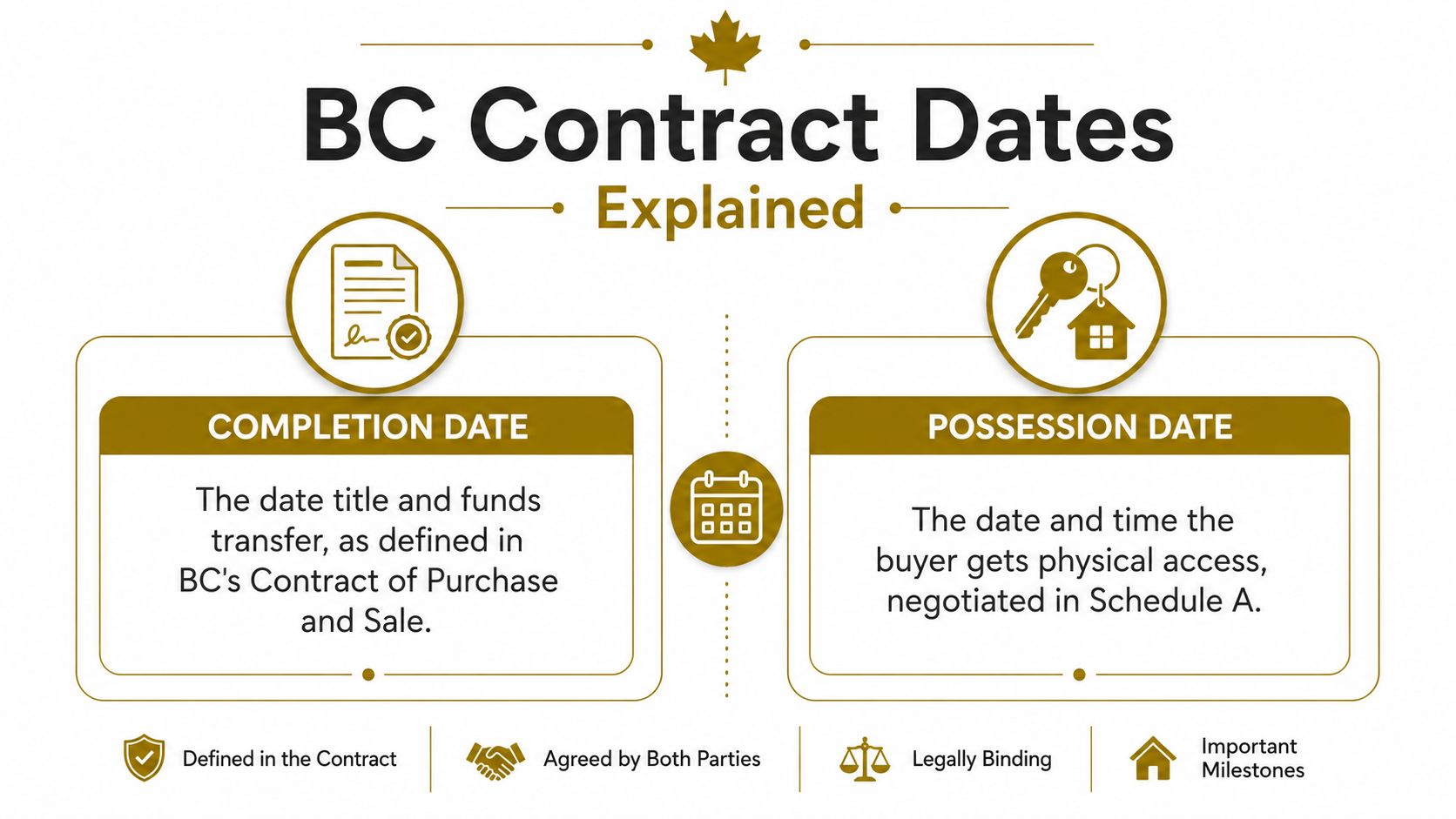
Where the dates live in the paperwork
In a typical Contract of Purchase and Sale, completion is negotiated as a fixed date, while possession is often spelled out separately, sometimes with a time of day. That is not a technicality. It separates the point where a buyer legally owns the home from the point where the buyer can open the front door in Cottonwood or Albion.
For a plain-English look at the broader home-buying sequence, see this buyer roadmap for Canada. If you want general closing context from outside BC, the New American Funding closing guide is useful background, but BC contracts still run on our own completion and possession wording.
The wording matters because the contract decides everything if the deal goes sideways. It decides who is in breach, who can enter the home, and who holds the upper hand. That is why I tell Maple Ridge clients to read those boxes before they start worrying about paint colours or fridge measurements.
The date on the contract controls the day. The assumption in your head does not.
If you are buying for the first time, stop treating the dates as interchangeable. Ask your agent and lawyer which box is completion, which box is possession, and whether possession is tied to a specific time. That one conversation avoids a lot of bad moving-day surprises.
How the Two Dates Differ in Practice
A Maple Ridge deal can look finished on paper while the seller is still in the house. That is the whole headache with completion and possession. One date moves the money and the title, the other hands over the keys, and BC contracts often leave a small gap between the two on purpose.
Completion is the legal event, and possession is the operational one. The first tells you when ownership changes hands through the paperwork and the funds are released. The second tells you when the buyer can walk in, unload the truck, and start living there. In practice, that split matters because a buyer may be on title before the seller has finished packing, and that affects movers, key release, insurance timing, and the way everyone handles the day.
That gap is where the friction shows up. A seller might still be cleaning out the garage while the buyer has already arranged insurance and redirected utilities. A mover can show up too early and sit idle. A key handoff can stall if the paperwork and the occupancy timing do not match. If you want the money side of that handoff laid out in plain English, the local guide to closing costs when buying a home in BC is the right companion read.
Straight answer: if the contract separates the dates, the buyer does not get to treat the home like an occupied property until possession starts.
The practical fix is simple. Read the contract time, not just the date, and line up the people who make the move happen. That means your lawyer or notary, your insurance broker, your movers, and your agent all need the same timing in front of them. If one of them is working off a different assumption, the whole day gets messy fast. That is also where real estate contract breach remedies come into play if someone refuses to vacate, holds back keys, or misses the agreed handoff window.
For sellers, the point is just as blunt. Once completion is done, you are in the final stretch, but you still need to get out cleanly before possession. If the place is not vacated on time, or if the condition at handoff is not what the contract promised, the problem does not disappear because the title has already changed. It becomes a timing issue with real consequences, and in a busy Maple Ridge transaction that usually means stress, delay, and extra cost.
What the Gap Means for Buyers and Sellers
The gap between completion and possession is where real-life problems show up. A buyer can legally own the home before they can occupy it, which means insurance, utilities, and moving plans need to line up with the actual contract time, not just the date on the calendar. That's especially important in family homes across Albion and Kanaka Creek, where one bad assumption can throw off a whole move.
For buyers
Your job is to be covered before you walk in. If completion happens first, you need your insurance arranged so the home is protected the moment ownership transfers, even if you're not sleeping there yet. You also need utility start dates aligned with the possession time, because the lights, heat, and water have to work when you arrive with a truck full of boxes.
You also need to be realistic about access. If the contract says possession is later in the day, don't send movers early and hope for the best. That's how you pay for waiting time and cranky crews.
For sellers
Until possession transfers, the place still needs to be protected and left in the condition promised. If a pipe bursts, if an appliance dies, or if the home isn't vacated on time, the seller doesn't get to shrug and call it someone else's problem. The contract timing controls who has rights, who has duties, and who can push for a remedy.
For broader context on tenant-style occupancy issues that can affect sellers and buyers, this local note on landlord rules in BC is worth keeping in mind if a property is occupied or recently tenanted.
If the seller stays past the agreed possession time, the buyer is no longer dealing with a courtesy issue. They're dealing with a contract problem, and the right response depends on the wording and the legal advice behind it. For a deeper look at what happens when a contract is breached, this real estate contract breach remedies guide gives useful context.
My rule at the table: If the possession time is unclear, it isn't negotiated properly yet.
Adjustments for property taxes, utilities, and strata fees should also line up with the correct date structure. That's not bookkeeping fluff. It decides who pays for the days before and after handoff. In a Maple Ridge deal, that's the difference between a clean closing and a dispute over a bill nobody expected.
Real Timeline Examples From Maple Ridge Transactions
The cleanest way to understand closing date vs possession date is to look at real deals. In Maple Ridge, the same 24-hour gap shows up again and again. Title changes hands, the seller may still be inside, and the buyer needs to know exactly when movers, insurance, keys, and money all line up. If you want a broader buyer checklist while you compare timelines, the Maple Ridge home buying guide is a useful place to start.
Cash condo purchase in downtown Maple Ridge
A cash buyer can move fast, and that usually makes for a shorter closing window. In a Canadian cash purchase, a 14-day close is a common shorthand for speed, but the buyer still completes first and takes possession only when the contract says so. Same-day access is not the point.
For a downtown condo, the work is in the handoff. The buyer may not be dealing with a lender, but they still need to book movers around the possession time, not the offer date. If the seller needs the morning to clear out, that needs to be accepted and built into the plan. Otherwise the buyer ends up waiting in the hallway with a truck parked outside.
Standard financed purchase in Silver Valley
A financed purchase takes more coordination, and the usual window is often around 30 to 45 days in Canadian transactions, with 30 days being a common working example. In Silver Valley, that gives the lender time to process the file, the lawyer time to prepare the transfer, and the moving company a clear possession target.
Buyers get sloppy here. They assume the date can float because financing is approved and conditions are removed. It cannot. If possession is written for the next day, your boxes stay put for one more night, even if everything else is ready. That is the contract speaking, not bad luck.
Longer close on an Albion acreage deal
A more complex file can stretch to a 60-day close when there are more moving parts. That comes up when the deal includes a subject-to-sale clause or extra coordination around the seller's next move. The longer timeline is not the problem. Poor sequencing is.
On an acreage deal in Albion, I tell buyers to treat possession as the move-in deadline. Completion is the legal transfer. Possession is the moment they can start carrying furniture through the door. If you confuse those two, you will book movers, cleaners, and insurance around the wrong date, and that gets expensive fast.
Rent-back after possession
Sometimes a seller needs a short rent-back after possession, including a 3-day stay if both sides agree. The buyer owns the home, but the seller keeps occupying it for a brief period under the contract terms. That can work well when the seller needs a weekend to finish packing without forcing the whole sale to shift.
The key is to keep the arrangement tight and written. The buyer should know who is responsible if something goes wrong during that short occupancy period, and the seller should know the move-out deadline is real. If you are unsure how these details fit into a first purchase, the Maple Ridge home buying guide is worth reading before you sign.
If you are comparing your own deal to these examples, use this rule. Completion tells you when the legal transfer happens. Possession tells you when the boxes can come through the door.
Negotiation Tips and Sample Contract Clauses
If you want fewer headaches, negotiate the possession time with the same seriousness you give the price. I'd rather see a clean morning possession written into a contract than watch a buyer sit in a moving truck all afternoon because nobody wanted to be specific.
What to ask for
- Morning possession: Ask for a clear morning handoff if your movers are booked early. That avoids paying crews to wait around while the seller finishes out the day.
- Short rent-back only if needed: If the seller needs extra time, keep it short and written. A few days is workable when the terms are plain.
- Holdback protection: If the seller could damage the home or leave work unfinished, push for a holdback or other protection through your legal team.
A good plain-English clause might say, “Possession shall occur at 10:00 a.m. on the possession date, after completion has been confirmed.” That kind of wording is much better than a loose date with no time attached. It tells everybody when the keys change hands.
Another useful line is, “Seller may remain in the property for three days after possession under a written rent-back arrangement.” If you use language like that, make sure the expectations around occupancy, insurance, and condition are crystal clear.
If you're buying in Maple Ridge and wondering who should be guiding these details, this local note on what a buyer's agent actually does is a good reminder that negotiation is part of the job, not a side hobby. Your agent should help push for a possession time that matches your move, not somebody else's convenience.
Don't negotiate possession by vibe. Negotiate it in writing, down to the time of day.
The strongest offers are not always the highest ones. They're the ones that leave the fewest loopholes. In BC, that means getting completion and possession aligned so your money, keys, and moving truck all land in the right order.
Common Questions From Maple Ridge Buyers and Sellers
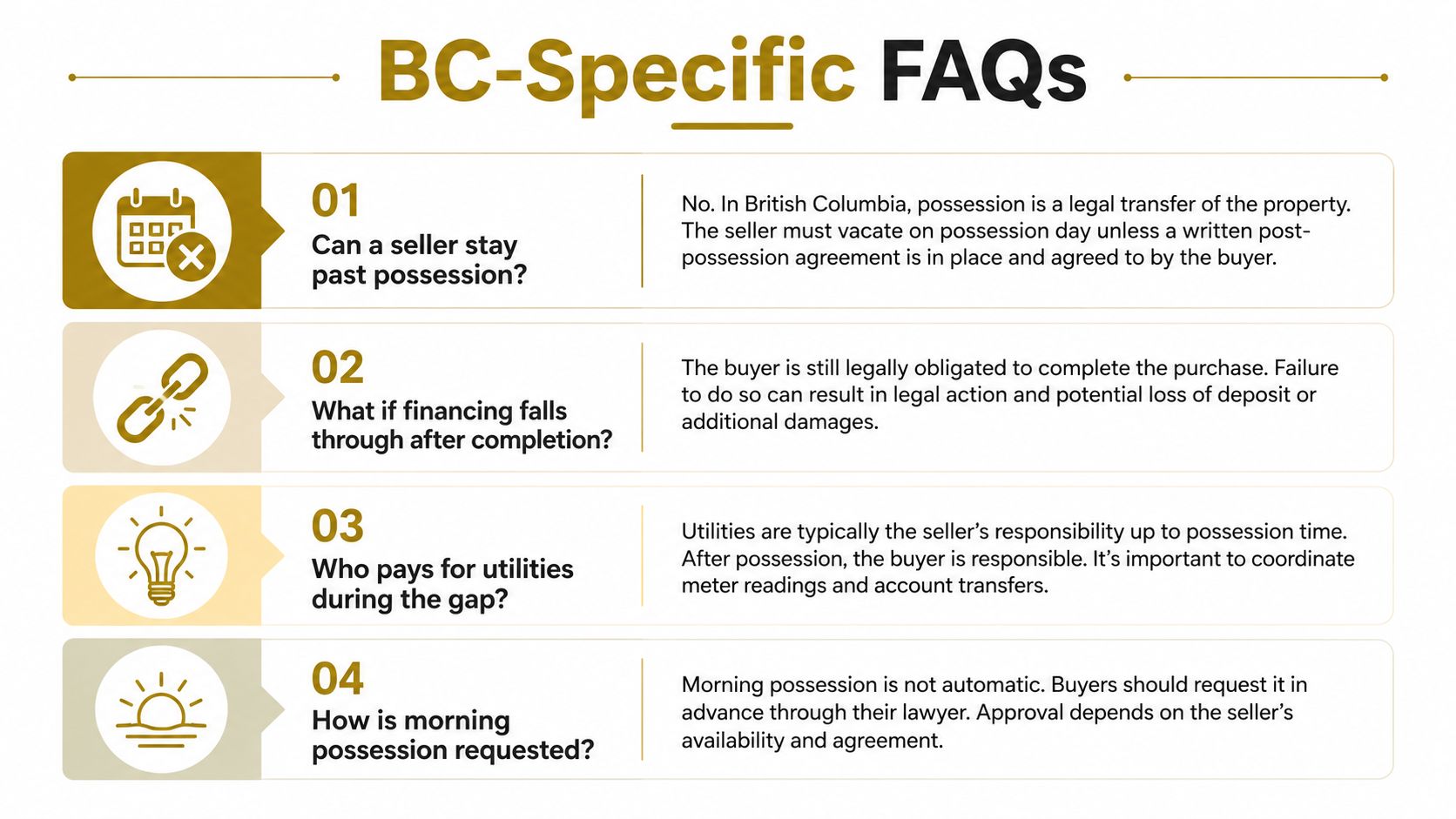
Can a seller stay past possession date? Yes, but only if the contract allows it. If they stay without permission, that's a contract problem, not a scheduling hiccup.
What if financing falls through the day before completion? The deal is in serious trouble, and the buyer needs legal advice immediately. That's exactly why completion and possession should be written clearly and reviewed before the moving truck is booked.
Is it normal for possession to be the day after completion in BC? Yes. That's common here, and it's usually done to make settlement cleaner and reduce risk.
Who pays for a broken hot water tank discovered at 4 p.m. on possession day? The contract wording controls the answer, but the timing matters because the home changes hands in stages. If the damage happened before possession, the seller may still have responsibility. If it happened after possession, the buyer may be looking at their own insurance or repair path.
If you're buying or selling in Maple Ridge or Pitt Meadows, don't leave these dates as casual guesswork. Get the completion and possession language nailed down before you sign, especially if your move has school drop-offs, rental overlap, or tight mover bookings attached to it.
If you want this handled cleanly from the start, visit Royal LePage Brookside Realty Property Management. Our local team helps Maple Ridge and Pitt Meadows clients line up the timing, paperwork, and property details so completion, possession, and move-in day all make sense together.